Best Waking Up App Alternatives in 2026: 7 Meditation Apps Compared
By Soothfy Team ·
Looking for a Waking Up alternative? We compare the 7 best meditation apps in 2026, including free options, with real ratings and prices.
Waking Up, created by neuroscientist and philosopher Sam Harris, isn't just a meditation app. It teaches you how meditation works, why it matters, and what it reveals about the mind, with courses on vipassana, loving-kindness and dzogchen, plus conversations with leading teachers. It has 4.9 stars from about 43,000 U.S. App Store reviews.
But it costs
29.99 a year, with no monthly plan (Lifestack), its sleep content is limited, and its philosophical style doesn't suit everyone, especially if you mainly want help with anxiety, stress or sleep. This guide compares the 7 best Waking Up alternatives in 2026, including several that are completely free.
Quick answer: the best Waking Up alternatives in 2026
🥇 Soothfy: best for calming anxiety and stress fast, with 2-minute CBT tools and mood and sleep tracking
Insight Timer: best free alternative
Healthy Minds Program: best free structured course
Headspace: best all-round meditation app
Plum Village: best free Zen-inspired app
Medito: best nonprofit, ad-free option
Calm: best for sleep and relaxation
About Soothfy (who wrote this)
This guide is written by the team behind Soothfy, a mental health app for ADHD, anxiety, depression, stress, insomnia, OCD, PTSD, panic attacks and addictive habits. Soothfy is our product, so we say clearly where another app is the better pick. Download Soothfy on the App Store or Google Play.
Waking Up Alternatives Compared
App
Best for
U.S. rating
Price (U.S.)
🥇 Soothfy
Anxiety and stress relief
—
$49.99/yr (free trial)
Insight Timer
Free variety
4.9 (≈450K)
Free · $59.99/yr Premium
Healthy Minds Program
Structured course
4.9 (≈9.3K)
Free
Headspace
All-round
4.8 (≈974K)
$69.99/yr
Plum Village
Zen teachings
5.0 (≈4K)
Free
Medito
Ad-free simplicity
4.9 (≈4.3K)
Free
Calm
Sleep
4.8 (≈2M)
$69.99–79.99/yr
Waking Up (for reference)
Meditation + philosophy
4.9 (≈43K)
29.99/yr
Ratings from the U.S. App Store (Nov 19, 2026); prices from App Store listings and Lifestack (Oct 2026).
What Waking Up Does Well
Depth. More than 600 hours of meditations, courses and conversations, according to Lifestack.
Theory alongside practice. It explains why each practice works.
Multiple traditions. Vipassana, metta and dzogchen in one place.
Generous free access. Anyone who can't afford it can ask for free access.
Why People Look for a Waking Up Alternative
Price. 29.99 a year with no monthly option.
Too philosophical. Some people just want to feel calmer, not explore the nature of the self.
Required introductory course. Lifestack notes you complete it before the full library opens.
Limited sleep content.
Long sessions. Hard for ADHD brains or busy days.
How We Chose
Meditation or mental wellbeing apps with guided practice
Free options included
Ratings checked on the U.S. App Store today
Soothfy is our app. If you want deep meditation teaching, Healthy Minds Program or Insight Timer is the closer match, and Waking Up itself offers free access if cost is the only issue.
The 7 Best Waking Up Alternatives in 2026
1. Soothfy: Best for Calming Anxiety and Stress Fast
Waking Up is wonderful for exploring the mind over months. But on a day when your heart is racing before a meeting or your thoughts won't stop at midnight, a 30-minute lesson on the nature of consciousness isn't always what you need. Soothfy is built for those moments.
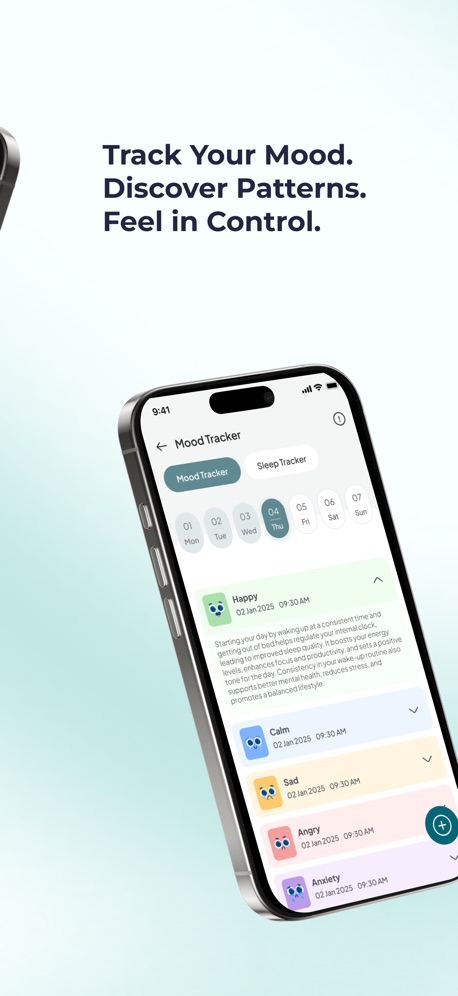
Instant Relief lets you tap your exact symptom and gives you 3 CBT exercises, including breathing and grounding, with a 2-minute timer. A personalized 30-day plan of 2- to 5-minute activities, tied to Anchor Habits, helps you build a short daily practice that actually sticks. The mood and sleep tracker shows whether it's working over weeks, and sound therapy helps you wind down.
Compared with Waking Up: Waking Up goes deep into meditation and philosophy; Soothfy focuses on short, practical tools for anxiety, stress, low mood and ADHD. Many people use both.
Key features
Sound therapy for calm and sleep
Instant Relief: pick your exact symptom, like overwhelm or a racing mind, and get 3 CBT exercises with a 2-minute timer
Personalized 30-day plan of 2- to 5-minute activities that adapts to your mood and energy
Anchor Habits: new habits tied to routines you already do, like making coffee
Mood and sleep tracker with weekly and monthly trends and reports for your doctor or therapist
Journal with text, voice notes and images
Pros
Help in 2 minutes
Builds a short daily habit
Less than half Waking Up's yearly price
Cons
Not a deep meditation course
Pricing
Free to download with a free trial, then $49.99/year or $8.99/month (U.S.). Get it on the App Store or Google Play, or learn more at soothfy.com.
Best for
People who meditate to manage anxiety or stress
ADHD brains that struggle with long sessions
Start with a 2-minute check-inA plan that adapts to you
Calm in 2 minutes, not 30
Try Soothfy free: quick CBT relief, sound therapy and mood and sleep tracking.
Insight Timer has one of the largest free meditation libraries in the world, with thousands of teachers across every tradition, from vipassana to loving-kindness. It has 4.9 stars from about 450,000 U.S. App Store reviews. See our Insight Timer alternatives.
Compared with Waking Up: Far more variety and mostly free, but less of a single, guided path.
Key features
Huge free library
Meditation timer
Courses (Premium)
Live events
Pros
Mostly free
Every style and teacher
Cons
Can be hard to choose what to play
Pricing
Free; Premium $59.99/year or monthly options (U.S. App Store).
Best for
People who want variety without paying
3. Healthy Minds Program: Best Free Structured Course
Healthy Minds Program, from the nonprofit Healthy Minds Innovations, teaches meditation through a structured path covering awareness, connection, insight and purpose, built on research from the Center for Healthy Minds at the University of Wisconsin–Madison. It has 4.9 stars from about 9,300 U.S. reviews.
Compared with Waking Up: Similarly thoughtful and structured, but science-led rather than philosophical, and free.
Key features
Four-pillar course
Active and seated practices
Short daily lessons
Pros
Free
Research-based
Cons
Smaller library
Pricing
Free.
Best for
People who want a guided path at no cost
4. Headspace: Best All-Round Meditation App
Headspace offers structured courses, short exercises, sleep content and focus music, plus an AI companion called Ebb. It's polished and beginner-friendly, with 4.8 stars from nearly 1 million U.S. reviews. Compare it in Soothfy vs Headspace.
Compared with Waking Up: Broader and more beginner-friendly, with much more sleep content, and cheaper per year.
Key features
Guided courses
Sleepcasts
Focus music
Ebb AI companion
Pros
Easy to start
Lots of sleep content
Cons
Less philosophical depth
Pricing
2.99/month or $69.99/year (U.S.).
Best for
Beginners and people who want sleep content too
5. Plum Village: Best Free Zen-Inspired App
Plum Village is the free app of the mindfulness community founded by Zen teacher Thich Nhat Hanh. It offers guided meditations, Dharma talks and a meditation timer, with no ads or subscriptions. It has a 5.0 rating from about 4,000 U.S. reviews.
Compared with Waking Up: A similarly spiritual, teaching-rich approach from a different tradition, entirely free.
Key features
Guided meditations
Dharma talks
Meditation timer
Mindfulness bells
Pros
Completely free
Gentle and warm
Cons
Rooted in one tradition
Pricing
Free.
Best for
People drawn to Zen and mindful living
6. Medito: Best Nonprofit, Ad-Free Option
Medito is a free, nonprofit meditation app with courses, sleep stories and a timer, and no ads or paywall. It has 4.9 stars from about 4,300 U.S. reviews.
Compared with Waking Up: Simpler and free, without Waking Up's theory and conversations.
Key features
Guided courses
Sleep content
Timer
Offline downloads
Pros
100% free
No ads
Cons
Smaller team and library
Pricing
Free.
Best for
Anyone who wants a free, simple practice
7. Calm: Best for Sleep and Relaxation
Calm is known for Sleep Stories, music and soundscapes, plus guided meditations. It has 4.8 stars from nearly 2 million U.S. reviews. Compare it in Soothfy vs Calm.
Compared with Waking Up: Much stronger for sleep and relaxation, lighter on meditation theory.
Key features
Sleep Stories
Meditations
Music and soundscapes
Pros
Huge sleep library
Cons
Expensive
Pricing
From 4.99/month; $69.99–79.99/year (U.S.).
Best for
People who mainly want better sleep
Which Meditation Style Suits You?
Style
What it's like
Try
Insight (vipassana)
Observing thoughts and sensations
Waking Up, Insight Timer
Loving-kindness (metta)
Wishing well to yourself and others
Insight Timer, Healthy Minds
Zen mindfulness
Breathing, walking and mindful living
Plum Village
Body scan
Moving attention through the body
Headspace, Medito
Short CBT-based calm
Breathing and grounding in 2 minutes
Soothfy
Sleep meditation
Relaxation to fall asleep
Calm, Headspace
Building a Meditation Habit That Sticks
Start tiny. Two minutes a day beats 30 minutes once a week.
Anchor it. Meditate right after something you already do, like brushing your teeth.
Same place, same time. Your brain learns the cue.
Expect wandering. Noticing your mind wandered is the practice, not a failure.
Track how you feel. A quick mood note before and after shows what's helping.
Mood + sleep trackerYour personal goals
Meditation With ADHD or Anxiety
Long silent sits can be tough with ADHD, and for some people with anxiety, focusing on the breath can briefly increase worry. That doesn't mean meditation isn't for you; it means starting differently. Try movement-based practices like walking meditation, shorter sessions with guidance, or grounding exercises that use your senses. If a practice makes you feel worse, stop and try another. And if anxiety or low mood are getting in the way of daily life, talk to a doctor or therapist. See also our daily routine to reduce anxiety.
Free vs Paid Meditation Apps
You don't need to pay to meditate well. Plum Village, Medito and Healthy Minds Program are completely free, and Insight Timer's free library is huge. Paid apps usually add structure, polish, sleep content or extra tools. A good approach is to start with a free app for a month. If you meditate on most days and want more, upgrade to the paid app whose extras you'll actually use: sleep content (Calm, Headspace), depth (Waking Up), or practical mental health tools like CBT exercises and mood tracking (Soothfy).
Signs a Meditation App Isn't Right for You
You skip it most days because sessions feel too long
You finish sessions feeling more restless or anxious, not less
You use it mainly to fall asleep but it has little sleep content
You're paying for a library you rarely explore
You want help in a hard moment, but the app is built for long practice
If two or more sound familiar, switch styles rather than giving up. Shorter, more practical sessions, movement-based practice or CBT-based breathing tools often suit busy, anxious or ADHD brains better.
A 2-Week Meditation Starter Plan
Days
Practice
Length
1–3
Breath counting after your morning coffee
2 minutes
4–6
Body scan before bed
5 minutes
7–9
Walking meditation on a short walk
5 minutes
10–12
Loving-kindness for yourself and someone you love
5 minutes
13–14
Choose your favorite and try 10 minutes
10 minutes
Key takeaways
Waking Up costs 29.99/year with a 7-day trial, and offers free access to anyone who can't afford it.
Insight Timer, Healthy Minds Program, Plum Village and Medito are free alternatives.
Headspace is the best all-rounder; Calm is best for sleep.
If you meditate mainly to manage anxiety, stress or ADHD, Soothfy offers 2-minute CBT relief, sound therapy and mood and sleep tracking.
Final Verdict
For free depth, choose Insight Timer or Healthy Minds Program. For a polished all-rounder, Headspace. For sleep, Calm. For Zen teachings, Plum Village. And for quick, practical help with anxiety and stress, choose Soothfy.
1. What is the best Waking Up alternative in 2026?
Insight Timer is the best free alternative, Healthy Minds Program the best free structured course, and Headspace the best all-rounder. Plum Village and Medito are completely free. Soothfy is our pick if you meditate to manage anxiety, stress or ADHD and want quick CBT tools and mood and sleep tracking too.
2. How much does Waking Up cost?
Waking Up costs 29.99 a year with a 7-day free trial, and there's no monthly plan listed, according to Lifestack's October 2026 review. Waking Up offers free access to anyone who asks and can't afford it.
3. Can I get Waking Up for free?
Yes. Waking Up says it will give free access to anyone who can't afford a subscription, with no proof required, according to Lifestack's review.
4. Is there a free alternative to Waking Up?
Insight Timer, Healthy Minds Program, Medito and Plum Village are all free or mostly free.
5. What makes Waking Up different?
Waking Up, created by Sam Harris, combines guided meditation with theory and conversations about the nature of the mind, with courses on vipassana, metta and dzogchen. It's more philosophical than most meditation apps.
6. Which Waking Up alternative is best for beginners?
Headspace and Healthy Minds Program have clear, structured beginner courses. Waking Up's Introductory Course is also good but more conceptual.
7. Which alternative is best for sleep?
Calm and Headspace have much larger sleep libraries than Waking Up, which Lifestack notes has limited sleep content.
8. Is meditation good for ADHD?
Some people with ADHD find short meditations helpful for focus and emotional regulation. Long, silent sessions can be hard at first, so start with 2 to 5 minutes and build up.
9. Can meditation help anxiety?
Many people find mindfulness helps them notice anxious thoughts without getting caught up in them. If anxiety is severe or constant, talk to a doctor or therapist as well.
10. Do I need to meditate every day?
Regular, short practice usually helps more than occasional long sessions. Tying it to an existing habit, like after your morning coffee, makes it easier. Soothfy's Anchor Habits are built for this; download it on the App Store or Google Play.
This article is for information only and is not medical advice. Prices and features change often; check each provider's website or app store listing before you buy. Last updated November 19, 2026. Soothfy: soothfy.com