Best Apps for Overthinking: 7 Apps to Quiet a Busy Mind in 2026
By Soothfy Team ·
Can't stop replaying conversations or worrying about what's next? Here are the best apps for overthinking in 2026 and who each is for.
It's 11 p.m. and your brain is replaying a conversation from this afternoon. Then it jumps to tomorrow's meeting, then to a bill you forgot, then back to that conversation. You know thinking about it won't change anything, but you can't stop.
Overthinking, whether it's rumination about the past or worry about the future, is one of the most common reasons people feel anxious, exhausted and stuck. The good news is that it's a habit of the mind, and habits can change. Skills from cognitive behavioral therapy (CBT), mindfulness and journaling all help, and the right app can put those skills in your pocket.
In this guide we compare the 7 best apps for overthinking in 2026: what each one does well, where it falls short, what it costs and who it's for.
Quick guide: the best apps for overthinking in 2026
- 🥇 Soothfy: best overall, with 2-minute CBT exercises for racing thoughts, a voice journal and a daily plan
- Clarity: best CBT journal for challenging spiraling thoughts
- MindShift CBT: best free CBT toolkit for worry
- Wysa: best AI chatbot for talking thoughts through
- Rosebud: best AI journal for understanding thought patterns
- Headspace: best mindfulness for stepping back from thoughts
- Stoic: best daily reflection routine
How We Chose These Apps for Overthinking
To build this list, we compared each app's U.S. App Store listing, features and current prices, and read App Store reviews from people who use them for anxiety and racing thoughts. We favored apps that help you do something different with your thoughts, not just distract yourself for a few minutes.
Soothfy is our app. Where another app is the better pick for a need, we say so.
- Tools that interrupt or change overthinking: CBT exercises, thought records, mindfulness or structured reflection
- Help in the moment and over time
- Clear pricing: real U.S. App Store prices, October 2026
- Real user reviews from the App Store
- Actively updated in 2026
What Are the Best Apps for Overthinking?
The best apps for overthinking work in one of three ways. Some interrupt the loop in the moment with short exercises that calm your body and shift your attention. Some help you examine thoughts on paper, so a worry that felt huge shrinks when you see the evidence. And some train your mind over time, with mindfulness, so you can notice a thought without following it down the rabbit hole. The strongest approach combines all three. Here's how they compare at a glance.
Best Apps for Overthinking Compared
| App | Best for | Price (U.S.) |
|---|---|---|
| 🥇 Soothfy | CBT relief for racing thoughts + journal + plan | Free download · 7-day trial · $49.99/yr |
| Clarity | CBT thought journal | Free · Pro Mode up to $69.99 |
| MindShift CBT | Free CBT for worry | Free |
| Wysa | AI chatbot to talk it through | Free basics · Premium $74.99/yr |
| Rosebud | AI journal for patterns | Free · Bloom $12.99/mo |
| Headspace | Mindfulness | $12.99/mo or $69.99/yr |
| Stoic | Daily reflection routine | Free · Premium from $6.99/mo |
Prices: U.S. App Store listings, October 2026. They vary by country, plan and offer.
The 7 Best Apps for Overthinking in 2026
1. Soothfy: Best Overall for Overthinking

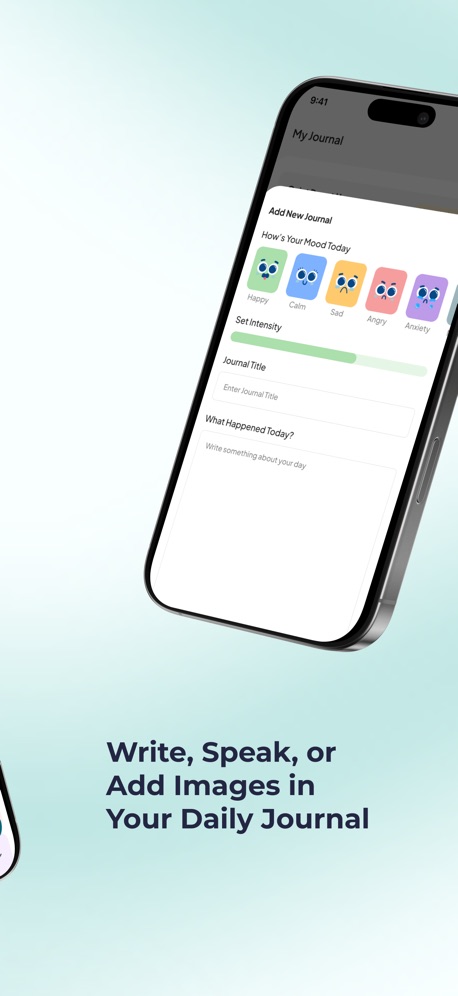
Soothfy is a mental health app for anxiety, stress, ADHD, depression, insomnia and more, built to interrupt overthinking when it starts. Open Instant Relief, tap your symptom, like racing thoughts, a worry spiral or replaying a conversation, and get 3 CBT exercises with a 2-minute timer. They help you calm your body, question the thought and shift your attention, so you can get back to your day or to sleep. Between spirals, a voice journal, mood and sleep tracking and a personalized 30-day plan help you understand your triggers and build calmer thinking habits.
Key features
- Instant Relief: 35 symptoms, including racing thoughts and worry spirals, each with 3 CBT exercises and a 2-minute timer. Soothfy learns which ones work best for you.
- Journal: write, record a voice note or add images to get thoughts out of your head, especially at night.
- Personalized 30-day plan: daily steps that build calmer thinking habits, adapted to your mood and energy.

- Mood and sleep tracker: see how sleep and stress connect to overthinking, with reports for your doctor.
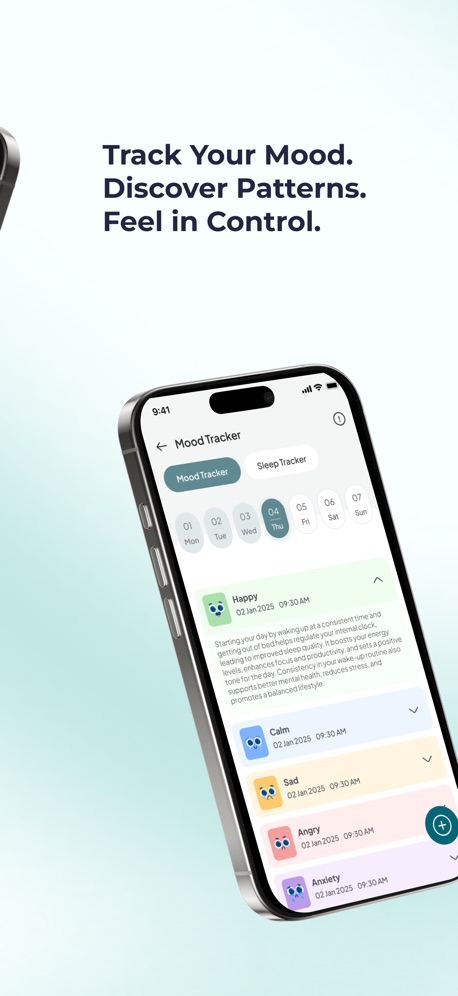
- Anchor Habits: tie a short evening worry dump or wind-down to your routine.
- One subscription for 9 conditions, plus sound therapy, a CBT library and a moderated community.
Pros
- Interrupts overthinking in 2 minutes
- Uses CBT, the best-studied approach for worry and rumination
- Voice journal for brain dumps at night
- Clear 7-day free trial, then $49.99/year
Cons
- No AI chatbot to talk back, so try Wysa or Rosebud if conversation is what calms you
Pricing
- Free to download with a 7-day free trial
- $49.99/year or $8.99/month (U.S.)
Suitable for
- People whose thoughts race at night
- Anyone stuck replaying conversations or worrying about the future
- People with ADHD or anxiety who get caught in thought loops
How to start
- Download Soothfy free on iPhone or Android.
- Take the 2-minute assessment.
- Next time your thoughts start looping, open Instant Relief and pick racing thoughts.
What users say
"Gets rid of stress that I've been having and gets me very relaxed. I definitely recommend it!"
App Store review (U.S.)
Quiet your mind in 2 minutes
CBT relief for racing thoughts, a voice journal and a daily plan. Free for 7 days.
Free to download · 7-day free trial


2. Clarity: Best CBT Journal for Challenging Spiraling Thoughts

Clarity is a CBT self-help journal built around the idea that changing your thoughts changes how you feel. Its guided thought records walk you through a situation, the thought it triggered, the emotion and a more balanced view. It helps you spot cognitive distortions that fuel overthinking, like catastrophizing, mind reading and all-or-nothing thinking, and includes AI-assisted journaling, a chatbot for problem solving and a mood tracker.
Compared with general journals, Clarity gives overthinkers a structure: instead of going round in circles, you write the thought down and test it. Many reviewers say it helped them work through things they couldn't in therapy. It takes a few minutes per entry, so it's better after a spiral than in the middle of one. Pro Mode is listed at several prices in the U.S. App Store, mostly $59.99 to $69.99 a year (October 2026).
Our take: choose Clarity if writing your thoughts down and testing them helps you break the loop.
Key features
- CBT thought records
- Cognitive distortion spotting
- AI-assisted journaling and chat
- Mood tracker
- Coping skills library

Pros
- Clear CBT structure
- Great for rumination
- AI prompts make journaling easier

Cons
- Takes a few minutes per entry
- Pro needed for many features
- Several prices listed
Pricing
- Free with limited features
- Pro Mode listed at several prices, mostly $59.99–69.99/year (U.S. App Store)
Suitable for
- People who overthink and want to test their thoughts
How to start
- Download Clarity and complete one thought record about today's biggest worry.
What users say
"It's a shame more people don't know about CBT and how many of us are unaware how it can help us out of suffering"
App Store review (U.S.)
3. MindShift CBT: Best Free CBT Toolkit for Worry

MindShift CBT is a free anxiety app from Anxiety Canada, built on cognitive behavioral therapy and covering general worry, social anxiety, panic and phobias. Its thought journal helps you challenge worries, and it includes guided relaxation, mindfulness meditations, daily check-ins, a fear ladder and a community forum. There are no subscriptions or in-app purchases.
Compared with paid apps, MindShift gives you solid CBT tools for worry at no cost. For overthinkers, the combination of challenging thoughts and practising relaxation is a strong starting point. It feels more like a workbook than a guide, so you need some motivation to use it regularly, and it's less polished than paid apps.
Our take: choose MindShift CBT if you want proven CBT tools for worry without paying anything.
Key features
- Thought journal for worries
- Guided relaxation and mindfulness
- Daily check-ins
- Fear ladder
- Community forum

Pros
- Completely free
- Based on CBT
- Made by an anxiety nonprofit

Cons
- Feels like a workbook
- Less polished
- Basic tracking
Pricing
- Free (no in-app purchases)
Suitable for
- People who want free, structured help with worry
How to start
- Download MindShift CBT and use the thought journal for one worry tonight.
What users say
"This app does a really good job of including both"
App Store review (U.S.)
4. Wysa: Best AI Chatbot for Talking Thoughts Through

Wysa is an AI mental health chatbot, shown as a friendly penguin, with techniques inspired by CBT and DBT. When your mind won't stop, you can type out what's going on and Wysa asks questions, reflects back what you said and suggests a technique, like observing thoughts, deep breathing or reframing. It's anonymous, and many people use it late at night when there's no one else to talk to.
Compared with journaling apps, Wysa feels more like a conversation, which helps some overthinkers get unstuck. The tradeoffs: chatbot replies can feel repetitive, and talking about a worry can occasionally feed the loop instead of ending it. Premium is listed at $74.99 a year or $19.99 a month in the U.S. App Store, with paid human support from $29.99 a week (October 2026).
Our take: choose Wysa if talking things through, even with an AI, helps you let go. See our Soothfy vs Wysa comparison.
Key features
- AI chatbot for venting and reflection
- Techniques for observing thoughts
- CBT and DBT-inspired tools
- Anonymous use
- Optional paid human support

Pros
- Available any time
- No fear of judgment
- Useful thought techniques

Cons
- Replies can feel repetitive
- Premium is pricey
- Talking can sometimes feed the loop
Pricing
- Free chatbot basics
- Premium $74.99/year or $19.99/month; guided support from $29.99/week (U.S. App Store)
Suitable for
- People who think best by talking things through
How to start
- Download Wysa and tell it the thought you can't stop replaying.
What users say
"Late at night when I have trouble sleeping, I often just want someone to talk to"
App Store review (U.S.)
5. Rosebud: Best AI Journal for Understanding Thought Patterns

Rosebud is an AI-powered journal that responds to your entries with follow-up questions and reflections, learns from what you write and points out patterns in your thinking. It has structured journaling designed for stress, anxiety and overthinking, and you can journal by voice or text.
Compared with Clarity's thought records, Rosebud is more conversational and exploratory. For overthinkers, its pattern insights can be eye-opening, showing you the same worry showing up in different forms week after week. It's one of the pricier journal apps, with Rosebud Bloom listed at $12.99 a month or $107.99 a year in the U.S. App Store and higher tiers above that (October 2026), and some users have reported lost voice recordings.
Our take: choose Rosebud if you want AI to help you see the patterns behind your overthinking. See our Reflectly alternatives guide.
Key features
- AI follow-up questions
- Pattern insights over time
- Structured reflection for overthinking
- Voice and text journaling
- Personalized prompts

Pros
- Deep, thoughtful AI
- Reveals recurring patterns
- Voice journaling

Cons
- Expensive tiers
- Some users report lost voice notes
- Not for quick relief
Pricing
- Free with limits
- Rosebud Bloom $12.99/month or $107.99/year; higher tiers listed (U.S. App Store)
Suitable for
- Reflective people who want to understand their thinking
How to start
- Download Rosebud and journal about the worry that keeps coming back.
What users say
"Rosebud has helped me work through many issues on my own as I am dealing with them."
App Store review (U.S.)
6. Headspace: Best Mindfulness for Stepping Back From Thoughts

Headspace is one of the best-known meditation apps, with 500+ guided meditations, courses on anxiety and stress, sleep content and focus music, plus coaching, therapy or Ebb, its AI companion, in some plans and regions. Its beginner courses teach a core skill for overthinkers: noticing a thought as a thought, without getting pulled into it.
Compared with CBT apps, Headspace doesn't ask you to argue with your thoughts. It trains you to let them pass, like cars going by, which many overthinkers find a relief. It takes regular practice to work, and a meditation can be hard to start when your mind is already racing. It's listed at $12.99 a month or $69.99 a year in the U.S. App Store, with Headspace Plus at $94.99 (October 2026).
Our take: choose Headspace if you want to build the long-term skill of stepping back from your thoughts.
Key features
- 500+ guided meditations
- Anxiety and stress courses
- Short resets
- Sleep content
- Coaching and therapy in some plans

Pros
- Teaches a powerful skill for overthinkers
- Beginner-friendly
- Polished content

Cons
- Needs regular practice
- Hard to start mid-spiral
- Subscription for most content
Pricing
- $12.99/month or $69.99/year; Headspace Plus $94.99 (U.S. App Store)
Suitable for
- People ready to build a daily mindfulness habit
How to start
- Download Headspace and do the first 3 sessions of the Basics course.
What users say
"When I am suffering from stress, health anxiety, or fibro/stress related body pains I turn to this app"
App Store review (U.S.)
7. Stoic: Best Daily Reflection Routine

Stoic is a journal and mental health companion built around preparing for your day in the morning and reflecting on it in the evening. It uses thought-provoking prompts, many inspired by Stoic philosophy, plus mood tracking, habits and insights about what affects how you feel. It has been an Apple App of the Day and says it has more than 4 million users.
Compared with in-the-moment tools, Stoic helps overthinkers by giving thoughts a set time and place. An evening reflection can get worries out of your head before bed, and Stoic ideas, like focusing on what you can control, are a natural fit for rumination. Some people find the app busy. Premium is listed in the U.S. App Store from $6.99 a month and around $39.99 a year, with a pricier AI tier (October 2026).
Our take: choose Stoic if a structured morning and evening ritual would help contain your overthinking.
Key features
- Morning and evening reflection
- Philosophy-inspired prompts
- Mood tracking and insights
- Habit tracking
- Breathing tools

Pros
- Gives worries a set time
- Thoughtful prompts
- Good insights

Cons
- Can feel busy
- AI tier is pricey
- Not for in-the-moment relief
Pricing
- Free with limits
- Premium from $6.99/month or $39.99/year; AI tier listed (U.S. App Store)
Suitable for
- People who like routine and reflection
How to start
- Download Stoic and do one evening reflection before bed tonight.
What users say
"Recently I craved more from my journaling- namely I wanted to see the patterns"
App Store review (U.S.)
Final Thoughts
Overthinking can feel like part of who you are, but it's a habit of the mind that responds well to the right skills. Soothfy is our top pick: 2-minute CBT exercises for racing thoughts and worry spirals, a voice journal for brain dumps and a daily plan that builds calmer habits. To test your thoughts on paper, choose Clarity. For free CBT, MindShift. To talk it through, Wysa. To see your patterns, Rosebud. To learn to step back, Headspace, and for a daily ritual, Stoic.
If overthinking keeps you from sleeping, working or enjoying life, talk to a doctor or therapist. Persistent worry can be a sign of generalized anxiety disorder, which is very treatable.
More guides: Reflectly Alternatives, Best Apps for Social Anxiety, Best Apps for Panic Attacks, How to Stop an Anxiety Spiral in 2 Minutes, Soothfy vs Wysa, Honest Daylio Review, ADHD Sleep Problems and Best Anxiety Relief Apps.
Try Soothfy free for 7 days
CBT relief for racing thoughts in 2 minutes.
Free to download · 7-day free trial
Best Apps for Overthinking: FAQs (2026)
1. What is the best app for overthinking?
Soothfy is our top pick, with 3 CBT exercises for racing thoughts or worry spirals and a 2-minute timer, plus a voice journal, mood and sleep tracking and a daily plan. Clarity is the best CBT journal for testing thoughts, and MindShift CBT is the best free option.
2. What causes overthinking?
Overthinking is often driven by anxiety, stress, perfectionism or a feeling that worrying keeps you safe or prepared. It can also be linked to ADHD, depression and poor sleep. Your brain is trying to solve a problem, but it gets stuck in a loop instead of reaching an answer.
3. What is the difference between rumination and worry?
Rumination usually means replaying the past, like a conversation or a mistake, while worry is about the future, like what might go wrong. Both are repetitive, hard to stop and make you feel worse, and both respond to similar CBT and mindfulness techniques.
4. How do I stop overthinking at night?
Try a brain dump: write or record everything on your mind an hour before bed, then decide on one next step for anything urgent. Do a short breathing or grounding exercise, and if you're still awake after 20 minutes, get up and do something calm until you feel sleepy. Soothfy's voice journal and Instant Relief help with each step.
5. Does CBT help with overthinking?
Yes. CBT helps you notice thinking traps, test anxious thoughts against the evidence and replace them with more balanced ones. It also uses techniques like scheduled worry time and behavioral experiments. It's one of the best-studied approaches for worry and rumination.
6. What is worry time?
Worry time is a CBT technique where you set aside 15 to 20 minutes each day to worry on purpose. When a worry pops up at other times, you write it down and save it for later. Many people find their worries shrink or feel less urgent by the time worry time arrives.
7. Can mindfulness stop overthinking?
Mindfulness doesn't stop thoughts, but it trains you to notice them without getting carried away. Over time, that makes it easier to let a worry pass instead of following it. Headspace and other meditation apps teach this skill with short daily practice.
8. Is journaling good for overthinking?
Yes, for most people. Writing thoughts down moves them out of your head and makes them easier to see clearly. Structured journals, like CBT thought records in Clarity, work better than free writing for breaking the loop, because they guide you to a more balanced view.
9. Is overthinking a symptom of ADHD?
Many people with ADHD experience racing thoughts and overthinking, especially at night or after social situations. ADHD can make it hard to switch attention away from a thought. Soothfy is built for ADHD brains, with short exercises and a plan that adapts to your energy.
10. Can an AI chatbot help with overthinking?
An AI chatbot like Wysa can help you put thoughts into words and suggest techniques. For some people that's calming. For others, talking about a worry repeatedly can feed the loop. If you notice that, switch to a short exercise or a thought record instead.
11. Is overthinking a sign of anxiety?
Persistent overthinking, especially worry that's hard to control and lasts for months, can be a sign of generalized anxiety disorder. It's common and very treatable. If it affects your sleep, work or relationships, talk to a doctor or therapist.
12. Can I track how often I overthink?
Yes. Tracking mood and sleep can show when overthinking tends to show up, like after poor sleep or busy days. Soothfy tracks mood and sleep together, with reports you can share with your therapist.
13. What are quick ways to stop a thought spiral?
Name what's happening ("I'm spiraling"), take 5 slow breaths with a longer exhale, ground yourself by naming 5 things you can see, then do something with your hands or body for a few minutes. Soothfy's Instant Relief guides you through short exercises like these.
14. When should I see a professional about overthinking?
See a doctor or therapist if overthinking keeps you awake most nights, makes it hard to work or study, or comes with low mood or panic. A therapist can tailor CBT or other approaches to you. In a crisis in the U.S., call or text 988.
Ready for a quieter mind?
Download Soothfy free and try Instant Relief the next time your thoughts race.
Free to download · 7-day free trial
This article is for information only and is not medical advice. Prices and features change often. Last updated October 27, 2026.