Best Apps for Panic Attacks: 7 Apps That Actually Help in 2026
By Soothfy Team ·
Need help the moment a panic attack hits? Here are the best apps for panic attacks in 2026, what each does well and who it's for.
Your heart pounds, your chest tightens, your hands tingle, and a voice in your head says something is very wrong. Maybe you're on a train, in a meeting or lying in bed at 2 a.m. A panic attack can feel like an emergency, even when your body is safe.
The good news: panic attacks are very treatable, and the right tools can help you ride one out and have fewer over time. Apps can't replace treatment, but in the moment they can guide your breathing, ground your attention and remind you that the wave will pass.
In this guide we compare the 7 best apps for panic attacks in 2026: what each one does in the moment, what it teaches you for the long term, what it costs and who it's best for.
Quick guide: the best apps for panic attacks in 2026
- 🥇 Soothfy: best overall, with 3 CBT exercises for your exact symptom, a 2-minute timer and a plan to reduce panic over time
- Dare: best panic-specific program based on the DARE method
- MindShift CBT: best free CBT toolkit for panic and anxiety
- Breathwrk: best for guided breathing exercises
- Clarity: best CBT journal for spotting panic triggers
- How We Feel: best free app for naming emotions
- Calm: best for calming down and sleeping after a panic attack
How We Chose These Panic Attack Apps
To build this list, we compared each app's U.S. App Store listing, features and current prices, and read App Store reviews from people who use them for panic attacks. We favored apps that help in two ways: getting you through an attack, and building the skills that make attacks less frequent. Cognitive behavioral therapy (CBT) is considered a first-line treatment for panic disorder, so CBT-based tools rank highly.
Soothfy is our app. Where another app is the better pick for a need, we say so.
- Help in the moment: breathing, grounding or guided exercises you can use during a panic attack
- Long-term skills: tools based on CBT or exposure, the approaches with the strongest evidence for panic
- Clear pricing: real U.S. App Store prices, October 2026
- Real user reviews from the App Store
- Actively updated in 2026
What Are the Best Apps for Panic Attacks?
The best apps for panic attacks do two jobs. In the moment, they give you something simple to focus on, like slow breathing, grounding or a short CBT exercise, so your body can calm down faster. Over time, they help you understand your triggers, stop fearing the physical sensations and face situations you've started avoiding. Some apps focus on one job, some do both. Here's how they compare at a glance.
Best Apps for Panic Attacks Compared
| App | Best for | Price (U.S.) |
|---|---|---|
| 🥇 Soothfy | CBT relief for your exact symptom + plan + mood and sleep tracking | Free download · 7-day trial · $49.99/yr |
| Dare | Panic-specific program (DARE method) | Free · from $9.99/mo · $59.99–69.99/yr |
| MindShift CBT | Free CBT toolkit | Free |
| Breathwrk | Guided breathing | Free · Pro plans from $1.99 |
| Clarity | CBT journal + triggers | Free · Pro Mode up to $69.99 |
| How We Feel | Naming emotions | Free |
| Calm | Calming down + sleep | From $14.99/mo · $69.99–79.99/yr |
Prices: U.S. App Store listings, October 2026. They vary by country, plan and offer.
The 7 Best Apps for Panic Attacks in 2026
1. Soothfy: Best Overall for Panic Attacks


Soothfy is a mental health app for anxiety, panic, stress, ADHD, depression and more, built for the exact moment you need help. During a panic attack you don't have to type or think: open Instant Relief, tap your symptom, like a racing heart, chest tightness or the fear that something is wrong, and get 3 CBT exercises with a 2-minute timer. You mark what worked, so next time Soothfy shows you what helps you most first. Between attacks, a personalized 30-day plan, mood and sleep tracking and a journal help you understand your triggers and feel more in control.
Key features
- Instant Relief: 35 symptoms to choose from, each with 3 short CBT exercises and a 2-minute timer, including breathing, grounding and reframing the fear.
- Learns what works: rate each exercise, and Soothfy puts your best tools first next time.
- Personalized 30-day plan: daily steps that build calm and confidence, adapted to your mood and energy.
- Mood and sleep tracker: spot patterns between sleep, stress and panic, with reports you can share with your doctor.
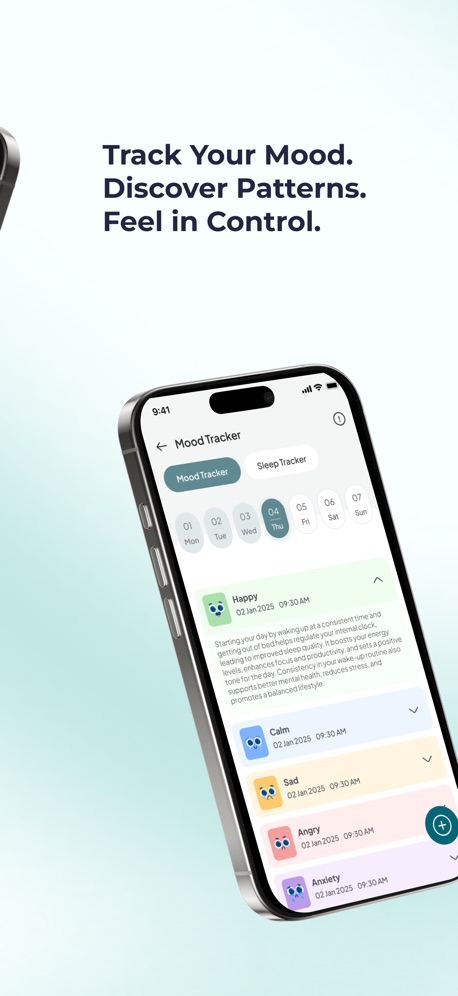
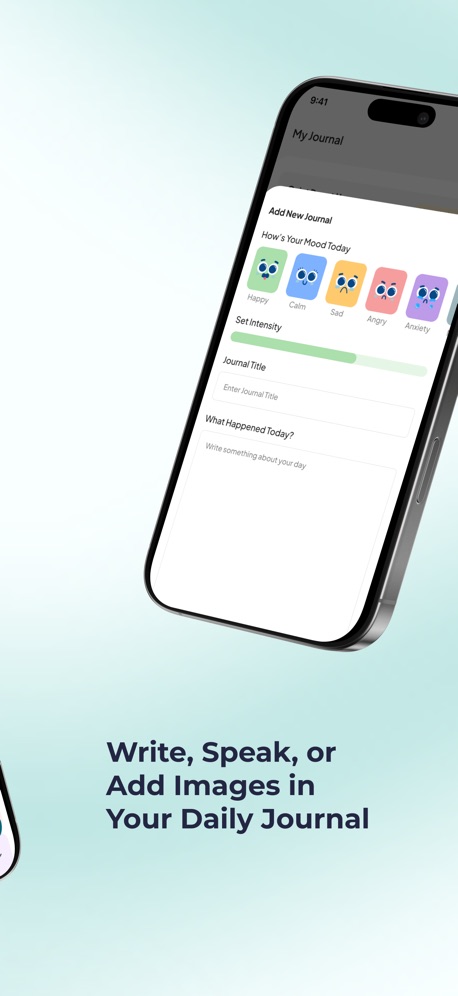
- Journal: write, record a voice note or add images after an attack to notice triggers.
- One subscription for 9 conditions, plus sound therapy, a CBT library and a moderated community.
Pros
- Built for the moment of panic: tap, don't type
- Uses CBT, a first-line approach for panic
- Long-term plan plus mood and sleep tracking
- Clear 7-day free trial, then $49.99/year
Cons
- No in-app therapist, so pair it with professional care if panic attacks are frequent
Pricing
- Free to download with a 7-day free trial
- $49.99/year or $8.99/month (U.S.)
Suitable for
- Anyone who has panic attacks or panicky anxiety
- People who freeze and can't think during an attack
- People who want to understand and reduce their panic over time
How to start
- Download Soothfy free on iPhone or Android.
- Take the 2-minute assessment.
- Open Instant Relief now, while you're calm, and try one exercise so it feels familiar when you need it.
What users say
"Gets rid of stress that I've been having and gets me very relaxed. I definitely recommend it!"
App Store review (U.S.)
Get through panic in 2 minutes
CBT exercises for your exact symptom, a plan to reduce panic and mood tracking. Free for 7 days.
Free to download · 7-day free trial


2. Dare: Best Panic-Specific Program

Dare is an anxiety and panic app based on the best-selling book DARE by Barry McDonagh. Its method teaches you to stop fighting anxiety and instead allow and move through the sensations, which takes away much of the fear that keeps panic going. The app includes rapid-relief audios you can play during an attack, situation-specific audios for things like driving, flying or dining out, a training program and a mood journal.
Compared with general anxiety apps, Dare is very focused on panic, health anxiety and intrusive thoughts, and many reviewers say Barry's calm voice got them through attacks when nothing else worked. It's approved by ORCHA, a U.K. health app review organization. The tradeoff is price and style: subscriptions are listed in the U.S. App Store from $9.99 to $12.99 a month and $59.99 to $69.99 a year (October 2026), and it's mostly audio, so it suits listeners more than people who like interactive tools.
Our take: choose Dare if panic attacks and the fear of having them are your main problem, and the DARE approach makes sense to you.
Key features
- Rapid-relief audios for panic attacks
- Situation audios for driving, flying, dining out and more
- Training program based on the DARE method
- Help for intrusive thoughts and health anxiety
- Mood journal

Pros
- Very focused on panic
- Calm, practical guidance
- Help for specific situations

Cons
- Several prices can be confusing
- Mostly audio-based
- Less help for other conditions
Pricing
- Free with limited content
- Subscriptions from $9.99/month; yearly $59.99–69.99 (U.S. App Store, several prices listed)
Suitable for
- People whose main struggle is panic attacks, agoraphobia or health anxiety
How to start
- Download Dare and save the rapid-relief audio as a favorite so it's one tap away.
What users say
"this app and Barry's guided meditations have done more than i can ever ask in terms of helping me through anxiety."
App Store review (U.S.)
3. MindShift CBT: Best Free CBT Toolkit for Panic

MindShift CBT is a free anxiety app from Anxiety Canada, built on cognitive behavioral therapy. It includes a thought journal for challenging anxious thoughts, a fear ladder for gradually facing situations you avoid, guided relaxation and meditations, daily check-ins and a community forum. There are no subscriptions or in-app purchases.
Compared with paid apps, MindShift gives you the core CBT tools for panic for free, including exposure through the fear ladder, which is one of the most effective ways to stop panic from shrinking your life. The tradeoff is that it feels more like a workbook than a guide: you need some motivation to use it, it's less helpful in the middle of an attack than an app with one-tap relief, and some reviewers want more flexible tracking.
Our take: choose MindShift CBT if you want proven CBT tools for panic without paying anything.
Key features
- Thought journal to challenge anxious thoughts
- Fear ladder for gradual exposure
- Guided relaxation and meditations
- Daily check-ins and progress
- Community forum

Pros
- Completely free
- Based on CBT, including exposure
- Made by an anxiety nonprofit

Cons
- Feels like a workbook
- Less quick help mid-attack
- Basic tracking
Pricing
- Free (no in-app purchases)
Suitable for
- People who want free, structured CBT for panic and anxiety
How to start
- Download MindShift CBT and build a fear ladder with 5 small steps toward a situation you avoid.
What users say
"Two main components of cognitive-behavioral therapy are exposure and cognitive reconstructing. This app does a really good job of including both"
App Store review (U.S.)
4. Breathwrk: Best for Guided Breathing

Breathwrk, now part of Peloton, is a breathing exercise app with guided exercises for calm, sleep, focus and energy. Each exercise uses visuals, sounds, haptic vibrations and breath coaches, so you can follow along even with your eyes closed or in a noisy place. You can set reminders, track streaks and follow recommended routines.
Compared with full mental health apps, Breathwrk does one thing very well. Slow breathing with a longer exhale is one of the fastest ways to calm the body during panic, and the haptic guidance means you can do it discreetly in public. It won't help you challenge anxious thoughts or understand triggers. Breathwrk Pro is listed at several prices in the U.S. App Store, from small monthly plans up to $69.99 (October 2026), and Peloton members get it free.
Our take: choose Breathwrk if slow breathing is what calms you down and you want the best breathing guide available.
Key features
- Guided breathing for calm, sleep and focus
- Visual, sound and haptic guidance
- Breath coaches and classes
- Reminders and streaks
- Free for Peloton members

Pros
- Excellent, easy-to-follow breathing
- Haptics work discreetly in public
- Quick to use in the moment

Cons
- Breathing only, no CBT tools
- Several Pro prices listed
- No mood or trigger tracking
Pricing
- Free with limited exercises
- Breathwrk Pro listed at several prices up to $69.99 (U.S. App Store)
Suitable for
- People who calm down best with guided breathing
How to start
- Download Breathwrk and practise one calming exercise daily so it's automatic when panic hits.
What users say
"I would use the calming one the most when I was feeling more anxiety and it definitely helped calm my breathing down"
App Store review (U.S.)
5. Clarity: Best CBT Journal for Spotting Panic Triggers

Clarity is a CBT self-help journal for stress, anxiety and low mood. It helps you track your mood, spot cognitive distortions, like catastrophizing, which drives a lot of panic, and reframe anxious thoughts with guided exercises. It also has AI-assisted journaling and a chatbot for problem solving, plus coping skills and a mood tracker.
Compared with in-the-moment apps, Clarity is most useful after an attack, when you want to understand what happened and change the thoughts behind it. Over time, that can make attacks less frightening and less frequent. It's less helpful during the peak of panic. Pro Mode is listed in the U.S. App Store at several prices, mostly $59.99 to $69.99 a year, with smaller plans also listed (October 2026).
Our take: choose Clarity if you want to dig into the thoughts that fuel your panic with a structured CBT journal.
Key features
- CBT thought records and reframing
- Cognitive distortion spotting
- AI-assisted journaling and chat
- Mood tracker
- Coping skills library

Pros
- Strong CBT journaling
- Helps you understand panic triggers
- AI prompts make journaling easier

Cons
- Less help mid-attack
- Pro needed for many features
- Several prices listed
Pricing
- Free with limited features
- Pro Mode listed at several prices, mostly $59.99–69.99/year (U.S. App Store)
Suitable for
- People who want to understand and challenge panic thoughts
How to start
- Download Clarity and complete one thought record after your next anxious moment.
What users say
"Self-therapy is important too and this app helps to make that statement a reality."
App Store review (U.S.)
6. How We Feel: Best Free App for Naming Your Emotions
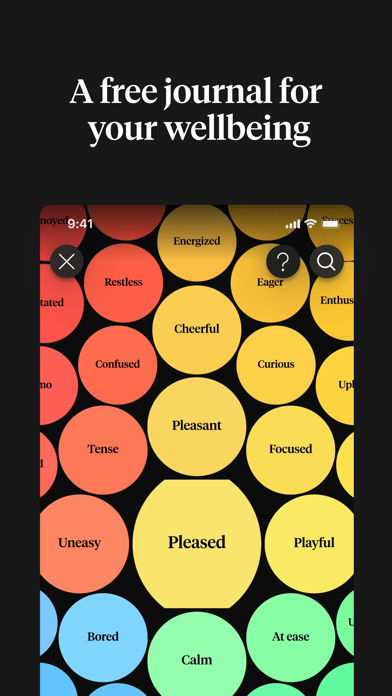
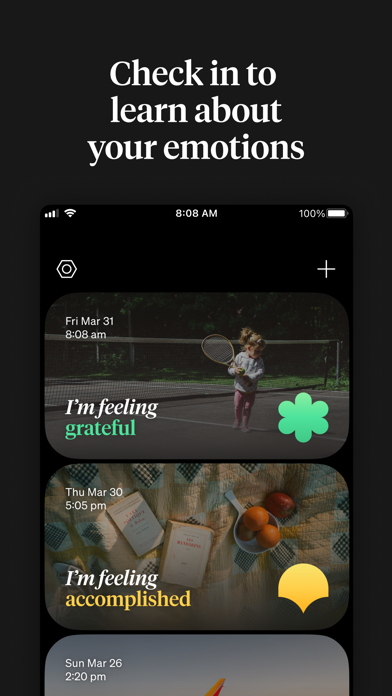
How We Feel is a free app from a science-based nonprofit, created with Yale's Center for Emotional Intelligence and based on the work of Dr. Marc Brackett. You check in by choosing from dozens of specific emotions, and the app suggests short strategies, like breathing, movement or reframing, for how you feel right now. It can also bring in sleep, exercise and health data from Apple Health to show patterns.
Compared with panic-specific apps, How We Feel is gentler and broader. Naming an emotion precisely, like "panicked" rather than "bad", can itself reduce its intensity, and the patterns help you see when panic tends to show up. It isn't designed to guide you through a full attack, and it has no exposure tools. Its privacy approach stands out: your data stays on your device unless you opt in to research.
Our take: choose How We Feel if you want a free, private way to understand your emotions and what triggers panic.
Key features
- Check-ins with dozens of specific emotions
- Short strategies for each feeling
- Sleep, exercise and health trends from Apple Health
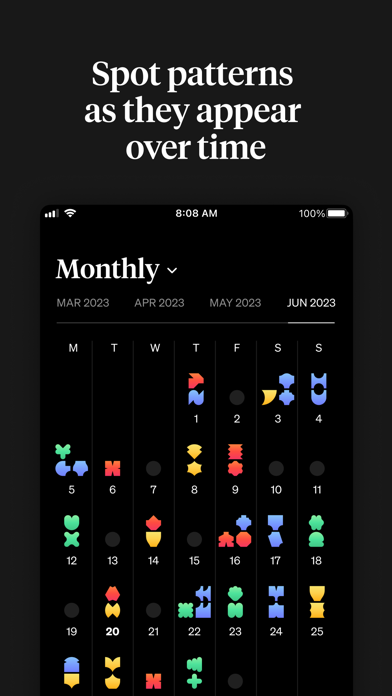
- Patterns over time
- Data stays on your device by default
Pros
- Completely free, nonprofit
- Strong privacy
- Helps you name and understand emotions
Cons
- Not built for the peak of a panic attack
- No exposure or panic program
- Health data trends need Apple Health
Pricing
- Free (nonprofit)
Suitable for
- People who want to understand their emotions and panic patterns
How to start
- Download How We Feel and check in twice a day for a week to see your patterns.
What users say
"this app really helped me learn how to label my feelings effectively"
App Store review (U.S.)
7. Calm: Best for Calming Down and Sleeping After a Panic Attack

Calm is one of the most popular wellness apps, with guided meditations, breathing exercises, relaxing music, soundscapes and Sleep Stories narrated by well-known voices. It has courses on anxiety and stress, and a large library of short sessions you can use when you feel on edge.
Compared with panic-focused apps, Calm is better for the hours after an attack, when you're shaky, drained and struggling to sleep, and for lowering your overall stress level day to day. It's less helpful at the peak of panic, and it doesn't teach exposure or CBT skills in a structured way. Calm Premium is listed at several prices in the U.S. App Store, from $14.99 a month and $69.99 to $79.99 a year (October 2026).
Our take: choose Calm if night-time panic or post-panic exhaustion keeps you from sleeping. See our Calm alternatives guide.
Key features
- Breathing exercises
- Guided meditations and anxiety courses
- Sleep Stories and soundscapes
- Relaxing music
- Daily Calm sessions

Pros
- Great for winding down after panic
- Excellent sleep content
- Polished and easy to use

Cons
- Not designed for the peak of panic
- No CBT or exposure program
- Several Premium prices listed
Pricing
- Calm Premium from $14.99/month; $69.99–79.99/year (U.S. App Store, several prices listed)
Suitable for
- People whose panic disrupts their sleep
How to start
- Download Calm and save one breathing exercise and one Sleep Story for nights after an attack.
What users say
"I tried a few other meditation apps before trying Calm, but I didn't like them. I love the Calm meditations."
App Store review (U.S.)
Final Thoughts
Panic attacks are frightening, but they're also very treatable, and the right app can help you get through each one and have fewer over time. Soothfy is our top pick: tap your exact symptom and get 3 CBT exercises with a 2-minute timer, then build calm with a personalized plan and mood and sleep tracking. For a panic-specific audio program, choose Dare. For free CBT tools and exposure, MindShift CBT. For breathing, Breathwrk. To understand triggers, Clarity or How We Feel, and for sleep after an attack, Calm.
If you have frequent panic attacks, talk to a doctor to rule out medical causes and ask about CBT or other treatment. Apps work best alongside professional care.
More guides: How to Stop an Anxiety Spiral in 2 Minutes, Best Anxiety Relief Apps, Soothfy vs Wysa, Best Wysa Alternatives, Why Anxiety Feels Different With ADHD, CBT Apps Now That Woebot Has Shut Down, Happier Meditation Alternatives and Balance Alternatives.
Try Soothfy free for 7 days
CBT relief for your exact panic symptom in 2 minutes.
Free to download · 7-day free trial
Best Apps for Panic Attacks: FAQs (2026)
1. What is the best app for panic attacks?
Soothfy is our top pick, because you can tap your exact symptom during an attack and get 3 CBT exercises with a 2-minute timer, without typing or thinking. It also builds long-term skills with a personalized plan and mood and sleep tracking. Dare is the best panic-specific audio program, and MindShift CBT is the best free option.
2. Can an app stop a panic attack?
An app can't switch a panic attack off, but it can help you ride it out faster and with less fear by guiding your breathing, grounding your attention and reminding you that the sensations are harmless and will pass. Most panic attacks peak within about 10 minutes.
3. What should I do during a panic attack?
Slow your breathing with a longer exhale, ground yourself by naming things you can see, hear and feel, and remind yourself that this is panic, not danger. Don't fight the sensations. Letting them rise and fall usually makes the attack shorter. Apps like Soothfy and Dare guide you through these steps.
4. Are there free apps for panic attacks?
Yes. MindShift CBT and How We Feel are completely free. Breathwrk, Clarity and Dare have free versions with limited content, and Soothfy has a 7-day free trial.
5. What about Rootd?
Rootd is a popular panic attack app with a panic button, guided breathing, an anxiety journal and lessons. It's listed in the U.S. App Store with Full Access plans from $6.99 a month and around $59.99 a year (October 2026). We left it out of the main list only because its App Store page currently shows no screenshots for us to review.
6. Does CBT work for panic attacks?
Yes. CBT, including gradual exposure to feared sensations and situations, is considered a first-line treatment for panic disorder, and many people see a big reduction in attacks. Apps can teach CBT skills, and a therapist can tailor them to you.
7. Why do panic attacks happen for no reason?
Panic attacks often seem to come out of nowhere, but they're usually linked to stress, poor sleep, caffeine, or noticing a body sensation, like a skipped heartbeat, and fearing it. That fear triggers more adrenaline, which creates more sensations, in a loop. Tracking mood, sleep and triggers can reveal patterns.
8. Can panic attacks happen at night?
Yes. Nocturnal panic attacks can wake you from sleep with a racing heart and fear. They're not dangerous, but they can make you afraid to sleep. Breathing exercises, a calming bedtime routine and apps like Soothfy or Calm can help you settle back down.
9. Is a panic attack dangerous?
Panic attacks feel frightening but are not dangerous for most people. However, chest pain, shortness of breath and dizziness can also have medical causes, so see a doctor, especially for your first attack. If you think you may be having a medical emergency, call 911.
10. How do I stop being afraid of the next panic attack?
Fear of the next attack, called anticipatory anxiety, keeps panic going. Learning that the sensations are harmless, gradually facing feared situations and practising calming skills when you're not panicking all help. Soothfy's plan and MindShift's fear ladder are built for this.
11. Are panic attacks linked to ADHD?
Anxiety and panic are more common in people with ADHD, often because of stress, overwhelm and emotional dysregulation. Soothfy is built for ADHD brains, with short exercises and a plan that adapts to your energy.
12. Can I track my panic attacks?
Yes. Soothfy tracks mood and sleep together, so you can see how stress and sleep connect to anxious days, with reports you can share with your doctor. Clarity and How We Feel also help you spot patterns.
13. When should I see a doctor about panic attacks?
See a doctor if you're having repeated attacks, avoiding places because of them, or worrying a lot about the next one. Your doctor can rule out medical causes and refer you for CBT or other treatment. In a crisis in the U.S., call or text 988.
14. Can apps replace therapy for panic disorder?
No. Apps are great for learning and practising skills and for help in the moment, but they don't replace a therapist or doctor. Many people use an app like Soothfy between sessions to practise what they learn in therapy.
Ready to feel in control again?
Download Soothfy free and try Instant Relief before your next panic attack.
Free to download · 7-day free trial
This article is for information only and is not medical advice. Prices and features change often. Last updated October 25, 2026.