7 Best OCD Apps for Intrusive Thoughts and Daily Support in 2026
By Soothfy Team ·
Stuck in a loop of intrusive thoughts and checking? Here are the best OCD apps in 2026 for calming the urge and building better days.
If you're in crisis or thinking about harming yourself, please reach out to a person right now. In the U.S., call or text 988 (Suicide & Crisis Lifeline). Elsewhere, contact your local emergency number. The apps below are not crisis services.
It's 11 p.m. and you've checked the stove three times. You know it's off. But the thought keeps coming back, louder each time, and the only thing that quiets it is checking once more. Then the next thought arrives.
OCD is exhausting, and waiting weeks for a specialist doesn't make the thoughts stop in the meantime. The right app won't replace treatment, but it can help you get through the hard moment, practise what therapy teaches, and see your progress day by day.
In this guide we compare the 7 best OCD apps in 2026: what each one does well, where it falls short, what it costs, and who it's for.
Quick guide: the best OCD apps in 2026
- 🥇 Soothfy: best for daily OCD support: 2-minute CBT relief when a thought spikes, a personalized plan, mood tracking and a community that gets it
- NOCD: best if you want live ERP therapy with an OCD specialist
- Choiceful: best for AI-guided ERP and ACT practice between sessions
- OCD.app: best for short daily exercises against negative self-talk
- Clarity: best CBT thought journal
- MindShift CBT: best completely free CBT toolkit
- Dare: best audio coaching for anxiety and intrusive thoughts
How We Chose These OCD Apps
Soothfy is our app. Where another app is the better pick for a need, we say so.
- Built on evidence-based methods such as CBT, ERP or ACT
- Clear best use: each app solves one OCD need better than the rest
- Real prices and real user reviews from the App Store, October 2026
- Actively updated in 2026
- Honest about limits: no app replaces treatment with a qualified professional
What Are the Best OCD Apps?
The best OCD apps help in two ways: they give you something to do in the moment a thought or urge spikes, and they help you keep practising between therapy sessions. Some connect you with ERP therapists, some guide you through exercises, and some focus on the daily habits and mood patterns around OCD. Here's how they compare at a glance.
OCD Apps Compared
| App | Best for | Price (U.S.) |
|---|---|---|
| 🥇 Soothfy | Daily OCD support: 2-minute CBT relief, plan, mood tracking, community | Free download · 7-day trial · $49.99/yr |
| NOCD | Live ERP therapy with an OCD specialist | Free app · therapy cost depends on insurance |
| Choiceful | AI-guided ERP and ACT practice | Free · $19.99–29.99/mo · $119.99–179.99/yr |
| OCD.app | Short daily self-talk exercises | Free · $19.99/mo · $78.99/yr |
| Clarity | CBT thought journal | Free · Pro Mode from $9.99 |
| MindShift CBT | Free CBT tools and fear ladder | Free |
| Dare | Audio coaching for anxiety | Free · $53.99–69.99/yr |
Prices: U.S. App Store listings, October 2026. They vary by country, plan and offer.
The 7 Best OCD Apps in 2026
1. Soothfy: Best Overall for Daily OCD Support


Soothfy is a mental health app for people whose brains work differently, and OCD is one of the 9 conditions it's built for. It's made for the hard moments in an ordinary day: when an intrusive thought spikes, when the urge to check or redo something won't let go, or when anxiety is running the show. Use it on its own for daily support, or alongside ERP therapy to keep practising between sessions.
Key features
- Instant Relief: pick OCD, choose your exact symptom from 35 options, describe what's happening, and get 3 CBT exercises built for that moment, each with a 2-minute timer. You mark what worked, so Soothfy learns what helps you.
- Personalized 30-day plan: daily CBT exercises, habit stacking, behavioral activation and journaling, adjusted to your mood and energy so the hard days don't break your progress.

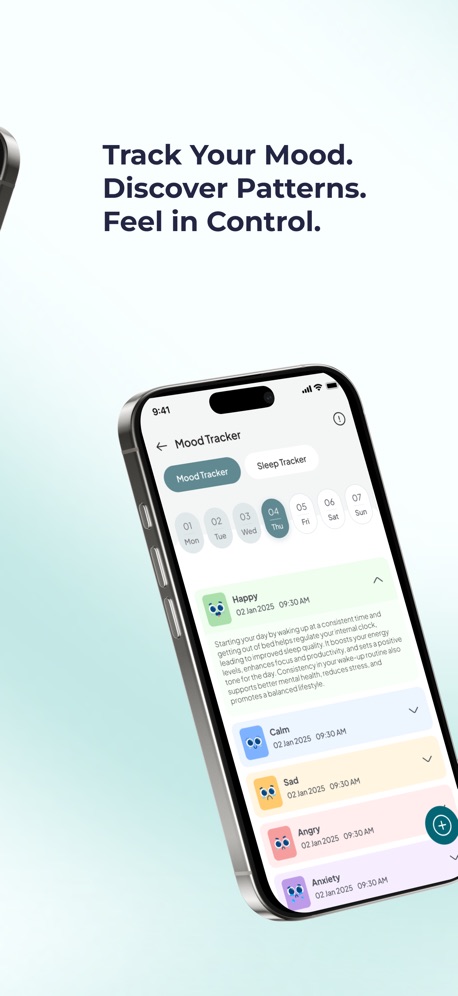
- Mood tracker: see how stress, sleep and mood connect to your symptoms, with weekly and monthly trends and reports you can share with your therapist.
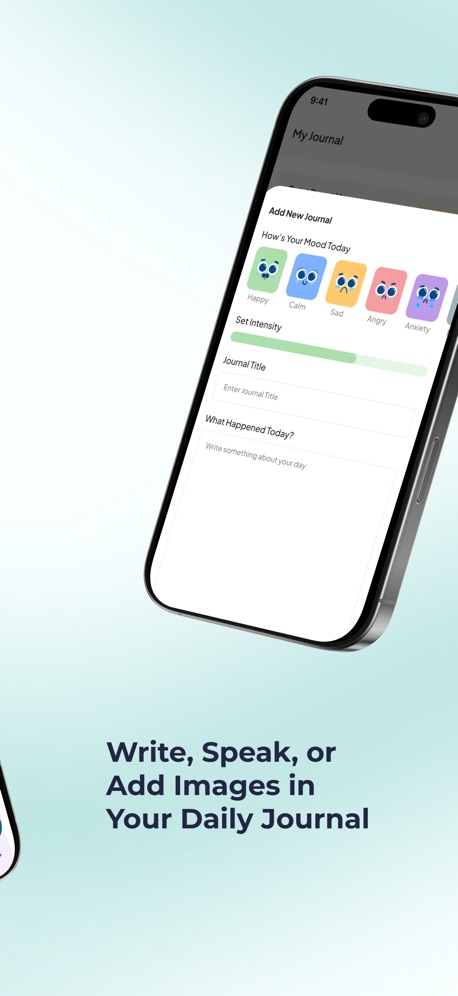
- Journal: write, record a voice note or add images to notice triggers and patterns instead of arguing with the thought.
- CBT library and community: practical lessons on the ABC model and behavioral tools, plus a moderated community of people managing OCD, anxiety, ADHD and more.
Pros
- Help in the exact moment a thought or urge spikes
- Covers OCD alongside anxiety, ADHD, depression and sleep in one subscription
- Mood and sleep reports to bring to your therapist
- Cheaper than most OCD-specific apps, with a 7-day free trial
Cons
- Not a therapy service, so pair it with an ERP specialist if you can
Pricing
- Free to download with a 7-day free trial
- $49.99/year or $8.99/month (U.S.)
Suitable for
- People living with OCD who want daily support between appointments
- Anyone whose OCD comes with anxiety, ADHD or low mood
- People on a waitlist for therapy who want to start building skills now
How to start
- Download Soothfy free on iPhone or Android.
- Take the 2-minute assessment and choose OCD.
- Next time a thought spikes, open Instant Relief and pick your symptom.
What users say
"Soothfy feels like having a therapist and a friend in my pocket. It's comforting, easy to use, and actually effective!"
App Store review (Canada)
"I've been using it for my anxiety, and honestly, it's been super helpful. The breathing exercises are really calming."
App Store review (Canada)
Get through the next OCD spike
2-minute CBT relief, a personalized plan and mood tracking in one app. Free to start.
Free to download · 7-day free trial


2. NOCD: Best for Live ERP Therapy with a Specialist

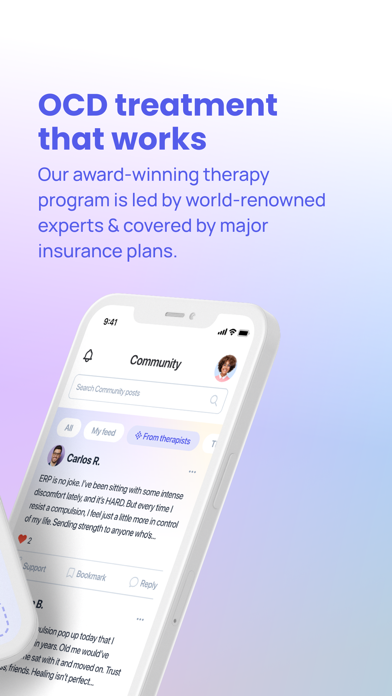
NOCD connects you with licensed therapists trained in exposure and response prevention (ERP), the gold-standard treatment for OCD. You do live video sessions, message your therapist between sessions, and use the app's tools and support groups in between.
Key features
- Live video ERP therapy with an OCD-trained therapist
- Messaging and therapy tools between sessions
- Community and weekly support groups
Pros
- Specialist ERP therapy without a long search
- Built by people with OCD, with OCD experts
Cons
- Therapy costs more than a self-help app
- Mainly focused on the U.S.
Pricing
- The app is free; therapy cost depends on your insurance and plan. NOCD offers a free call with its care team.
Suitable for
- People ready to start ERP therapy with a specialist
How to start
- Download NOCD and book the free call with its care team.
What users say
"I've only had this app for a day and it's really helped me with my compulsions. It made me feel normal and I didn't realise how many other people had OCD"
App Store review (U.K.)
3. Choiceful: Best for AI-Guided ERP and ACT Practice

Choiceful is an OCD support app with an AI chat trained to guide you through OCD episodes using ERP and ACT techniques. It also includes a personalized program, exposure planning and tracking, and daily check-ins. Its listing is clear that it doesn't replace a therapist.
Key features
- AI chat that guides you through an OCD episode
- Personalized treatment program
- Exposure planning, coaching and tracking
- Daily check-ins
Pros
- Built specifically for OCD by people with OCD
- Financial aid available by email

Cons
- One of the more expensive subscriptions
- AI guidance isn't the same as a therapist
Pricing
- Free
- $19.99–29.99/month or $119.99–179.99/year (U.S. App Store)
Suitable for
- People already doing ERP who want guided practice between sessions
How to start
- Download Choiceful and set up your first exposure plan.
What users say
"This app originally helped me understand and map out what I had been experiencing with OCD for over five years."
App Store review (U.S.)
4. OCD.app: Best for Short Daily Exercises

OCD.app (from GGtude) offers quick daily exercises, about 3–4 minutes a day according to its listing, designed to replace obsessive and negative self-talk with healthier thinking habits. It also covers anxiety, depression, body image and more.
Key features
- 3–4 minute daily exercises
- 50+ free exercises, with 1,000+ more in the paid plans
- Progress tracking
Pros
- Very easy to fit into a busy day
- Game-like format that's easy to come back to

Cons
- Most content needs a subscription
- Less hands-on support for an episode in the moment
Pricing
- Free
- $19.99/month or $78.99/year; one-time unlock listed at $199.99 (U.S. App Store)
Suitable for
- People who want a small daily habit to challenge OCD thinking
How to start
- Download OCD.app and do one exercise each morning.
What users say
"Such a great app. I found all the categories helpful so far, initially for me focusing on the anxiety section. Easy to use, just a few minutes of your day."
App Store review (Australia)
5. Clarity: Best CBT Thought Journal

Clarity is a CBT self-help journal for stress, anxiety and low mood. It helps you spot cognitive distortions, reframe unhelpful thoughts, and track moods and activities, with an AI chatbot and guided journals for reflection.
Key features
- Thought reframing and cognitive distortion tools
- Mood, emotion and activity check-ins
- AI journaling and chatbot
- Guided journals and programs
Pros
- Journal entries stored on your phone by default
- Lots of free tools to start

Cons
- Not made specifically for OCD
- Most programs and AI features need Pro Mode
Pricing
- Free
- Pro Mode plans listed from $9.99 to $69.99 (U.S. App Store)
Suitable for
- People who want to write thoughts down and challenge them with CBT
How to start
- Download Clarity and complete one thought reframe tonight.
What users say
"Within the first few days of using the app to record how I was feeling and my moods, I started to feel better."
App Store review (U.S.)
6. MindShift CBT: Best Completely Free CBT Toolkit

MindShift CBT is a free anxiety app built on cognitive behavioral therapy. It includes a thought journal, a fear ladder for facing fears step by step, guided meditations, daily check-ins and a community forum, with no subscriptions.
Key features
- Thought journal and coping cards
- Fear ladder for gradual exposure
- Guided meditations and daily check-ins
- Community forum
Pros
- Completely free, with no hidden costs
- The fear ladder supports step-by-step exposure practice

Cons
- No section made specifically for OCD
- Fewer guided programs than paid apps
Pricing
- Free (no subscriptions)
Suitable for
- Anyone who wants proven CBT tools at no cost
How to start
- Download MindShift CBT and build your first fear ladder.
What users say
"As far as exposure therapy goes, the section 'taking action' offers a really detailed activity for scheduling activities to face your fears and anxieties."
App Store review (U.S.)
7. Dare: Best Audio Coaching for Anxiety and Intrusive Thoughts

Dare is an audio-based training program, inspired by the best-selling book DARE, for anxiety, panic attacks, worry and intrusive thoughts. It includes hundreds of audios, a mood journal and, for Premium members, buddy groups and live sessions with its clinical team.
Key features
- Hundreds of audio guides and meditations
- Mood journal
- Premium buddy groups and live Zoom sessions
Pros
- Great when you need a calm voice to talk you through it
- Lots of free audio

Cons
- More focused on anxiety and panic than OCD
- Premium needed for the extra programs
Pricing
- Free
- $9.99–12.99/month or $53.99–69.99/year (U.S. App Store)
Suitable for
- People whose OCD comes with heavy anxiety or panic
How to start
- Download Dare and listen to one audio when a thought spikes.
What users say
"I found this when I needed it the most and long story short, it helped save my life."
App Store review (Canada)
Final Thoughts
No app replaces ERP therapy with an OCD specialist, but the right one makes the hard moments easier and keeps you practising. Soothfy is our top pick for daily OCD support: 2-minute CBT relief when a thought spikes, a personalized plan, mood tracking and a community that understands. For live ERP therapy, choose NOCD. For guided ERP practice, Choiceful. For a free toolkit, MindShift CBT.
More guides: How to Stop an Anxiety Spiral in 2 Minutes, Best Anxiety Relief Apps, Wysa Alternatives, Daylio Alternatives, Honest Sanvello Review, Why Anxiety Feels Different with ADHD, 8 Signs of ADHD and Anxiety, ADHD Anxiety Statistics and BetterSleep Alternatives.
Try Soothfy free for 7 days
Daily OCD support that's there the moment a thought spikes.
Free to download · 7-day free trial
Best OCD Apps: FAQs (2026)
1. What is OCD?
Obsessive-compulsive disorder (OCD) is a mental health condition with unwanted, repeated thoughts, images or urges (obsessions) that cause distress, and behaviors or mental acts (compulsions) done to reduce that distress. It's much more than being tidy, and it's treatable.
2. Can an app help with OCD?
Yes, as support. Apps can help you get through a spike, practise skills, track triggers and stay consistent between sessions. The most effective treatment for OCD is exposure and response prevention (ERP) with a trained therapist, sometimes with medication, so use an app alongside professional care when you can.
3. What is the best app for OCD?
Soothfy is the best all-round app for daily OCD support: Instant Relief gives you 3 CBT exercises with a 2-minute timer the moment a thought spikes, plus a personalized plan, mood tracking and a community. If you want live ERP therapy, NOCD connects you with an OCD specialist.
4. What is the best free OCD app?
MindShift CBT is completely free, with a thought journal and a fear ladder for gradual exposure. OCD.app, Choiceful and Clarity have free versions, and Soothfy has a 7-day free trial of everything.
5. What is ERP therapy?
Exposure and response prevention (ERP) means gradually facing the thoughts or situations that trigger your OCD while resisting the compulsion. Over time, the anxiety drops on its own and the urge loses its power. It's best done with a trained therapist.
6. Which app offers ERP therapy for OCD?
NOCD offers live ERP therapy with licensed, OCD-trained therapists. Choiceful offers AI-guided ERP and ACT practice, but it isn't therapy.
7. How do I stop intrusive thoughts?
Trying to push a thought away usually makes it louder. CBT and ERP teach you to notice the thought, label it as OCD and let it be there without acting on it. Soothfy's Instant Relief gives you short CBT exercises for exactly that moment.
8. Can an app replace OCD therapy?
No. Apps are best used as support between sessions or while you're waiting for care. If OCD is taking up a lot of your day, talk to a doctor or an OCD specialist.
9. What app helps track OCD triggers?
Soothfy's journal and mood tracker help you notice triggers and patterns, with reports you can share with your therapist. Choiceful and Clarity also include daily check-ins.
10. Is there an OCD app with a community?
Soothfy has a moderated community of people managing OCD, anxiety, ADHD and more. NOCD has a community and weekly support groups, and MindShift CBT has a forum.
11. Which OCD app is best for anxiety too?
Soothfy covers OCD and anxiety together, with Instant Relief, guided breathing and mood tracking. Dare is also strong for anxiety and panic.
12. Do OCD apps work for kids and teens?
Most OCD apps are made for adults. For a child or teen, talk to a doctor first and choose care made for young people.
13. How much do OCD apps cost?
Prices range from free (MindShift CBT) to around $180 a year. Soothfy is $49.99 a year or $8.99 a month with a 7-day free trial. NOCD therapy cost depends on your insurance.
14. What's the best OCD app overall in 2026?
For daily support, Soothfy: 2-minute CBT relief when a thought spikes, a personalized plan, mood tracking and a community, all in one app. For live ERP therapy, NOCD.
Ready for calmer days?
Download Soothfy free and use Instant Relief the next time a thought spikes.
Free to download · 7-day free trial
This article is for information only and is not medical advice. Prices and features change often. Last updated October 5, 2026.