Best I Am Affirmations App Alternatives in 2026: 7 Apps Compared
By Soothfy Team ·
Looking for an alternative to the I Am affirmations app? We compare the 7 best affirmation, gratitude and self-talk apps in 2026, plus what research says about affirmations.
The I Am app is one of the most popular self-care apps in the world, with 4.8 stars from about 740,000 U.S. App Store reviews. It sends short positive statements, like "I am capable" or "I am worthy of love", to your lock screen throughout the day.
For many people, those reminders are a nice lift. For others, they stop working, start to feel hollow, or cost more than expected, with Premium listed at
4.99 a month or $69.99 a year (App Pricing Lab). And research suggests affirmations don't help everyone equally. This guide compares the 7 best I Am alternatives in 2026, and explains when a different approach might help more.
Quick answer: the best I Am app alternatives in 2026
🥇 Soothfy: best when affirmations don't stick, with CBT tools for negative thoughts
ThinkUp: best for affirmations in your own voice
Gratitude Plus: best for affirmations plus gratitude
Five Minute Journal: best short daily positivity habit
Motivation: best for daily quotes
Finch: best gentle self-care game
Insight Timer: best free guided affirmations
About Soothfy (who wrote this)
This guide is written by the team behind Soothfy, a mental health app for ADHD, anxiety, depression, stress, insomnia, OCD, PTSD, panic attacks and addictive habits. Soothfy is our product, so we say clearly where another app is the better pick. Download Soothfy on the App Store or Google Play.
I Am Alternatives Compared
App
Approach
U.S. rating
Price (U.S.)
🥇 Soothfy
CBT tools + daily plan
—
$49.99/yr (free trial)
ThinkUp
Your-voice audio affirmations
4.7 (≈7.5K)
$39.99/yr · $99.99 one-time
Gratitude Plus
Gratitude + affirmations
4.9 (≈21K)
Free · from 0.99/mo
Five Minute Journal
Morning/evening prompts
4.8 (≈17.6K)
Free · Premium
Motivation
Daily quotes
4.8 (≈1.08M)
Free · Premium
Finch
Self-care game
4.9 (≈775K)
Free · from $34.99/yr
Insight Timer
Guided audio
4.9 (≈450K)
Free · $59.99/yr
I Am (for reference)
Affirmation reminders
4.8 (≈740K)
$69.99/yr · 49.99 lifetime
Ratings from the U.S. App Store (Nov 2026); prices from App Store descriptions and App Pricing Lab.
Do Affirmations Work? What the Research Says
Affirmations are popular, but the evidence is mixed. In a well-known 2009 study in Psychological Science, Joanne Wood, Elaine Perunovic and John Lee asked people to repeat "I'm a lovable person". People with high self-esteem felt slightly better. But people with low self-esteem felt worse, presumably because the statement clashed with what they believed about themselves (National Geographic).
That doesn't mean affirmations are useless. It suggests they work best when they're believable. Some practical tips:
Make it believable. "I'm learning to cope with this" beats "I'm fearless".
Focus on actions. "I can take one small step today" is easier to accept than a statement about who you are.
Use your values. Reflecting on what matters to you (family, kindness, learning) can be more grounding than praise.
Notice the argument. If your mind fights back, that's useful information, and a sign to try a CBT approach instead.
Why People Look for an I Am Alternative
Price. Premium can cost $69.99 a year or more.
Notification fatigue. Reminders stop registering after a while.
Affirmations feel untrue. Especially on low days.
Wanting more than words. Some people need tools for anxiety, low mood or self-criticism.
Wanting to track progress. I Am doesn't show whether your mood is improving.
How We Chose
Each app supports positive self-talk, gratitude or self-care
Free options included
Ratings checked on the U.S. App Store today
Soothfy is our app. If you love affirmations and just want a cheaper or more personal version, ThinkUp is the closer swap.
The 7 Best I Am Alternatives in 2026
1. Soothfy: Best When Affirmations Don't Stick
Affirmations work by repeating positive statements. But if your inner voice is loud and critical, "I am enough" can feel like a lie, and your brain argues back. Research has found that for people with low self-esteem, positive self-statements can even backfire (National Geographic). Soothfy takes a different approach, based on CBT.
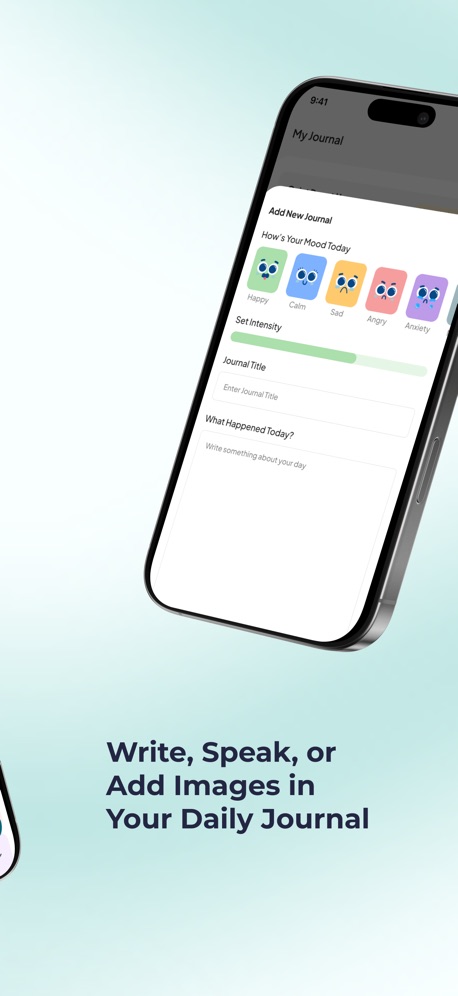
Instead of telling yourself something you don't believe, Soothfy helps you work with the thought. Instant Relief gives you 3 CBT exercises for your exact feeling with a 2-minute timer. The journal lets you write or record a voice note and tag your mood, so you can spot what triggers negative thoughts. A personalized 30-day plan of 2- to 5-minute activities, tied to Anchor Habits, builds small daily actions that grow real confidence over time.
Compared with I Am: I Am gives you positive words; Soothfy gives you skills for when those words don't feel true, plus mood and sleep tracking.
Key features
Instant Relief: pick your exact symptom, like overwhelm or a racing mind, and get 3 CBT exercises with a 2-minute timer
Personalized 30-day plan of 2- to 5-minute activities that adapts to your mood and energy
Anchor Habits: new habits tied to routines you already do, like making coffee
Mood and sleep tracker with weekly and monthly trends and reports for your doctor or therapist
Journal with text, voice notes and images
Pros
CBT-based, not just positive thinking
Helps with anxiety, low mood and ADHD
Tracks whether you're actually feeling better
Cons
No daily affirmation widget like I Am
Pricing
Free to download with a free trial, then $49.99/year or $8.99/month (U.S.). Get it on the App Store or Google Play, or learn more at soothfy.com.
Best for
People whose inner critic argues with affirmations
Anyone managing anxiety or low mood
Journal: write or speakStart with a 2-minute check-in
When "I am enough" doesn't feel true
Try Soothfy free: CBT tools that work with your thoughts, not against them.
2. ThinkUp: Best for Affirmations in Your Own Voice
ThinkUp lets you choose or write affirmations, record them in your own voice and play them back with music. Hearing yourself can feel more personal than reading words on a screen. It has 4.7 stars from about 7,500 U.S. App Store reviews, though its last update was in August 2025.
Compared with I Am: Audio-first and personal rather than reminder-based.
Key features
Record affirmations in your voice
Background music
Affirmation library
Daily reminders
Pros
Very personal
Lifetime option
Cons
Less frequently updated
Pricing
Free; $7.99/month, $39.99/year or $99.99 one-time (App Store description).
Best for
People who prefer listening to reading
3. Gratitude Plus: Best for Affirmations Plus Gratitude
Gratitude Plus combines a gratitude journal, daily affirmations, prompts and vision boards. It has 4.9 stars from about 21,000 U.S. reviews. See our gratitude journal app alternatives.
Compared with I Am: Adds gratitude journaling and reflection, not just affirmations.
Key features
Gratitude journal
Affirmations
Vision boards
Prompts
Pros
Combines several positive habits
Cons
Premium for full features
Pricing
Free; Premium from 0.99/month (App Store description).
Best for
People who want gratitude and affirmations together
4. Five Minute Journal: Best Short Daily Positivity Habit
The Five Minute Journal asks the same few questions every morning and evening: what you're grateful for, what would make today great, a daily affirmation, and what went well. It has 4.8 stars from about 17,600 U.S. reviews.
Compared with I Am: Structured reflection with an affirmation built in, rather than a stream of reminders.
Key features
Morning and evening prompts
Daily affirmation
Photo of the day
Pros
Simple, proven format
Cons
Can feel repetitive
Pricing
Free; Premium subscription available.
Best for
People who want a two-minute positivity routine
5. Motivation: Best for Daily Quotes
Motivation, from the same developer as I Am, sends daily motivational quotes as reminders and widgets. It's hugely popular, with 4.8 stars from over 1 million U.S. reviews.
Compared with I Am: Quotes from others rather than "I am" statements; same style of reminders.
Key features
Daily quotes
Widgets
Categories and favorites
Pros
Very popular
Easy to use
Cons
Same developer and model as I Am
Pricing
Free; Premium available.
Best for
People who prefer quotes to affirmations
6. Finch: Best Gentle Self-Care Game
Finch turns self-care into a game with a virtual pet that grows as you complete small goals, check in on your mood and reflect. It has 4.9 stars from about 775,000 U.S. reviews. See our Finch alternatives.
Compared with I Am: Builds kindness to yourself through small actions, not just words.
Key features
Self-care goals
Mood check-ins
Reflection prompts
Virtual pet
Pros
Fun and gentle
Cons
Less depth for anxiety or low mood
Pricing
Free; Finch Plus from $34.99/year.
Best for
People who like playful motivation
7. Insight Timer: Best Free Guided Affirmations
Insight Timer's free library includes many guided affirmation and self-compassion meditations from different teachers. It has 4.9 stars from about 450,000 U.S. reviews. See our Insight Timer alternatives.
Compared with I Am: Guided audio sessions rather than short reminders, mostly free.
Key features
Guided affirmation meditations
Self-compassion practices
Timer
Pros
Mostly free
Huge variety
Cons
Takes time to find good tracks
Pricing
Free; Premium $59.99/year (U.S. App Store).
Best for
People who want guided, longer sessions
Affirmations vs CBT: A Quick Example
Situation
Affirmation approach
CBT approach
"I always mess things up."
Repeat "I am capable."
Ask: is that always true? What did I do well this week? Write: "I made a mistake today, and I've also done X and Y well."
"Everyone will think I'm stupid."
Repeat "I am confident."
Ask: what's the evidence? What would I tell a friend? Write a more balanced thought.
"I'm too anxious to cope."
Repeat "I am calm."
Do 2 minutes of slow breathing, then name one small next step.
The CBT approach takes a bit more effort, but because you're not asking your brain to believe something it doesn't, it often sticks better. Soothfy's journal and Instant Relief make this quick.
A plan that adapts to youYour personal goals
Building a Kinder Inner Voice
Notice the critic. Write down one harsh thought each day.
Ask what a friend would say. Write that version next to it.
Pick one believable statement for the day.
Take one small action that matches it.
Track your mood weekly to see what helps.
Key takeaways
I Am Premium is listed at 4.99/month, $69.99/year or 49.99 lifetime.
Research suggests affirmations can backfire for people with low self-esteem; believable statements work better.
ThinkUp, Gratitude Plus and Five Minute Journal are strong alternatives for positive habits.
Soothfy uses CBT tools to help when affirmations don't feel true, with mood tracking to see what's working.
Final Verdict
For affirmations in your own voice, choose ThinkUp. For gratitude, Gratitude Plus or Five Minute Journal. For playful self-care, Finch. And if affirmations make your inner critic louder, choose Soothfy for CBT tools that work with your thoughts.
1. What is the best alternative to the I Am affirmations app?
ThinkUp is the closest alternative if you want to record affirmations in your own voice. Gratitude Plus combines affirmations with gratitude journaling, and Five Minute Journal builds a short daily positivity habit. Soothfy is our pick if affirmations don't stick and you want CBT tools that help you challenge negative thoughts.
2. How much does the I Am app cost?
I Am has a free version with Premium options. App Pricing Lab lists I Am Premium at 4.99 a month, $69.99 a year or 49.99 lifetime, along with several other offers (checked March 2026). Check the App Store for current prices.
3. Do positive affirmations actually work?
They can help some people, but not everyone. A 2009 study in Psychological Science by Wood, Perunovic and Lee found that repeating "I'm a lovable person" made people with low self-esteem feel worse, while people with high self-esteem felt slightly better, as summarized by National Geographic.
4. Why do affirmations make me feel worse?
If an affirmation feels untrue, your brain may argue with it, which can strengthen the negative belief. Believable statements, like "I'm learning to handle this", often work better than big ones like "I'm amazing".
5. What works better than affirmations?
Many people find CBT-style thought challenging more helpful: notice the negative thought, look at the evidence, and write a more balanced version. Gratitude journaling and self-compassion exercises are other options.
6. Is there a free affirmation app?
I Am, Motivation and Gratitude Plus have free versions. Soothfy is free to download with a free trial.
7. Can I record my own affirmations?
Yes. ThinkUp lets you record affirmations in your own voice and play them with music.
8. Who makes the I Am app?
I Am is made by Monkey Taps, which also makes the Motivation app.
9. Are affirmation apps good for anxiety?
They can provide a moment of calm, but for anxiety, practical tools like breathing and grounding are often more effective in the moment. Soothfy's Instant Relief gives you 3 CBT exercises with a 2-minute timer; download it on the App Store or Google Play.
10. How often should I use affirmations?
Short, regular use, like once in the morning, tends to work best. If they consistently make you feel worse, try a different approach.
This article is for information only and is not medical advice. Prices and features change often; check each provider's website or app store listing before you buy. Last updated November 21, 2026. Soothfy: soothfy.com