Best Stoic App Alternatives in 2026: 7 Journal Apps Compared
By Soothfy Team ·
Looking for a Stoic journal app alternative? We compare the 7 best journaling apps in 2026 for mental health, AI reflection, gratitude and daily diaries.
Stoic made journaling feel purposeful: morning prep, evening reflection, mood check-ins and a daily quote from Marcus Aurelius or Seneca. With 4.8 stars from more than 36,000 U.S. App Store reviews, it's one of the most popular journal apps around.
But people switch for many reasons: the price, the philosophy angle not clicking, wanting a long-term diary, wanting AI reflection, or needing something easier on days when writing feels impossible. This guide compares the 7 best Stoic app alternatives in 2026, with real prices and ratings.
Quick answer: the best Stoic app alternatives in 2026
- 🥇 Soothfy: best if you journal for your mental health, with voice notes, CBT relief and mood and sleep tracking
- Day One: best all-round journal and long-term diary
- Rosebud: best AI reflection journal
- Five Minute Journal: best quick daily gratitude habit
- Journey: best cross-platform diary
- Daylio: best journal without writing
- Reflectly: best guided prompts for beginners
About Soothfy (who wrote this)
This guide is written by the team behind Soothfy, a mental health app for ADHD, anxiety, depression, stress, insomnia, OCD, PTSD, panic attacks and addictive habits. Soothfy is our product, so we say clearly where another app is the better pick. Download Soothfy on the App Store or Google Play.
Stoic Alternatives Compared
| App | Best for | U.S. rating | Price (U.S.) |
|---|---|---|---|
| 🥇 Soothfy | Mental health journaling + tools | — | Free download · 7-day trial · $49.99/yr |
| Day One | Long-term diary | 4.8 (≈119K) | Free · Silver $49.99/yr |
| Rosebud | AI reflection | 4.9 (≈3.4K) | $12.99/mo or $107.99/yr |
| Five Minute Journal | Gratitude habit | 4.8 (≈17.6K) | Free · Premium available |
| Journey | Cross-platform | 4.6 (≈5K) | $6.99/mo or $49.99/yr |
| Daylio | No-writing tracking | 4.8 (≈62K) | Free · from $4.99/mo |
| Reflectly | Guided prompts | 4.6 (≈82K) | $9.99/mo or $59.99/yr |
| Stoic (for reference) | Prompts + philosophy | 4.8 (≈36K) | Free · from $6.99/mo |
Ratings from the U.S. App Store; prices from Life Note, October 2026 and App Store listings, checked November 13, 2026.
Why People Look for a Stoic Alternative
- Price. Premium and AI tiers add up, especially if you only use a few features.
- The philosophy doesn't fit. Some people want prompts without Stoic quotes.
- Writing is hard on bad days. If typing feels like too much, you need voice notes or tap-based entries.
- Wanting more support. Reflecting on a hard day is useful, but sometimes you need a tool to calm down first.
- Wanting a lifelong diary. Stoic is built around daily check-ins more than memory keeping.
How We Chose
- Each app replaces something Stoic users value: prompts, reflection, mood tracking or a diary
- Ratings checked on the U.S. App Store; prices from official listings and Life Note's October 2026 comparison
- Actively updated in the last few months
Soothfy is our app. If you want a classic diary, Day One is the better pick.
The 7 Best Stoic Alternatives in 2026
1. Soothfy: Best for Journaling That Supports Your Mental Health
Stoic mixes journaling with mental health check-ins and philosophy. If the mental health side is what you used it for, Soothfy goes deeper. Its journal lets you write, record a voice note or add images, and tag your mood so you can spot triggers. Voice notes are especially helpful for ADHD brains and low-energy days when typing feels like too much.
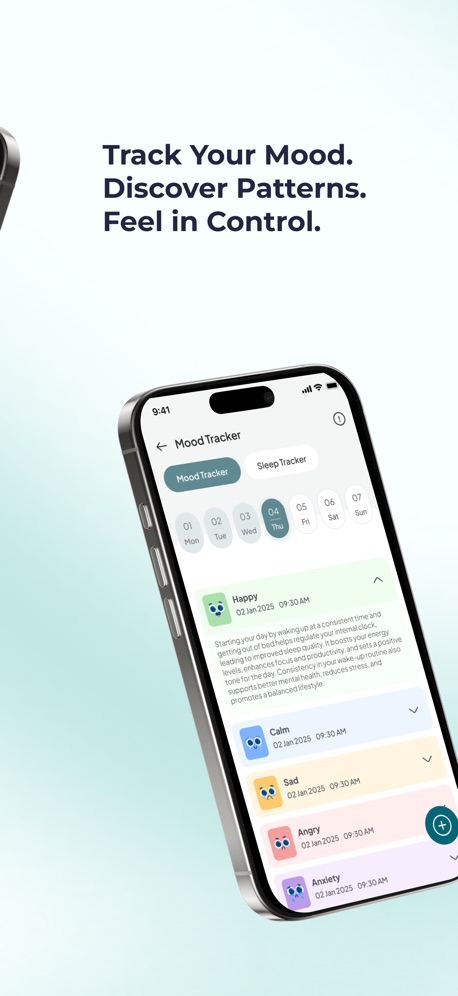
Around the journal, Soothfy adds what a diary can't: Instant Relief for anxious or low moments (3 CBT exercises with a 2-minute timer), a mood and sleep tracker with downloadable reports, and a personalized 30-day plan of short activities tied to Anchor Habits.
Compared with Stoic: Stoic is a reflective journal first. Soothfy is a mental health app with a journal built in, plus tools for the moments when reflecting isn't enough.
Key features
- Instant Relief: pick your exact symptom, like overwhelm or a racing mind, and get 3 CBT exercises with a 2-minute timer
- Personalized 30-day plan of 2- to 5-minute activities that adapts to your mood and energy
- Anchor Habits: new habits tied to routines you already do, like making coffee
- Mood and sleep tracker with weekly and monthly trends and reports for your doctor or therapist
- Journal with text, voice notes and images
Pros
- Voice-note journaling for low-effort days
- CBT relief and mood + sleep tracking in one app
- Covers anxiety, depression, ADHD and 6 more conditions
Cons
- No philosophy quotes or long-form diary features like Day One
Pricing
Free to download with a 7-day free trial, then $49.99/year or $8.99/month (U.S.). Get it on the App Store or Google Play, or learn more at soothfy.com.
Best for
- People who journal to manage anxiety, low mood or ADHD
- Anyone who finds daily writing hard

Try Soothfy free for 7 days
Write or speak your journal, track mood and sleep, and get 2-minute CBT relief.
Free to download · 7-day free trial · soothfy.com


2. Day One: Best All-Round Journal App
Day One is one of the most established journaling apps, with 4.8 stars from about 119,000 U.S. App Store reviews. It supports multiple journals, photos, audio, locations and weather, and offers end-to-end encryption. It's the best choice if you want a lifelong digital diary rather than mental health prompts.
Compared with Stoic: Better as a personal diary and memory keeper; fewer guided mental health prompts.
Key features
- Multiple journals
- Photos, audio and location
- End-to-end encryption
- "On This Day" memories
Pros
- Mature, reliable app
- Strong privacy features
Cons
- Fewer guided prompts
- AI features need the top plan
Pricing
Free Basic plan; Silver $49.99/year; Gold $74.99/year with AI features (Life Note, October 2026).
Best for
- People who want a long-term digital diary
3. Rosebud: Best AI Reflection Journal
Rosebud responds to your entries with thoughtful questions and reflections, like a coach who reads along. It has 4.9 stars from about 3,400 U.S. reviews. Note that it dropped its free plan on September 30, 2026, according to Life Note, and now offers a free trial only.
Compared with Stoic: More conversational and AI-driven than Stoic's prompts, and more expensive.
Key features
- AI follow-up questions
- Weekly insights
- Guided journals for specific goals
Pros
- Helps you go deeper
- Strong reviews
Cons
- No free plan
- Higher price
Pricing
Bloom $12.99/month or $107.99/year (Life Note, October 2026).
Best for
- People who want AI to help them reflect
4. Five Minute Journal: Best Quick Daily Gratitude Habit
Based on the popular paper journal, it asks the same few questions every morning and evening: what you're grateful for, what would make today great, and what went well. It takes about five minutes and has 4.8 stars from about 17,600 U.S. reviews. See also our gratitude journal app alternatives.
Compared with Stoic: Much simpler and quicker; fewer prompts and no mood analytics.
Key features
- Morning and evening prompts
- Daily quotes
- Photo of the day
Pros
- Very easy to keep up
- Proven simple format
Cons
- Repetitive for some
- Limited insights
Pricing
Free; Premium subscription available.
Best for
- People who want a short, positive daily habit
5. Journey: Best Cross-Platform Diary
Journey works on iPhone, Android and the web, and syncs through your own cloud storage. It offers prompts, coaching programs and mood tagging, with 4.6 stars from about 5,000 U.S. reviews.
Compared with Stoic: Better for people who switch between devices, including web and Android.
Key features
- Web, Android and iOS apps
- Mood tags and prompts
- Coaching programs
Pros
- Works everywhere
- Flexible
Cons
- Interface feels busier
- Premium for most features
Pricing
$6.99/month or $49.99/year (Life Note, October 2026).
Best for
- People who journal on multiple devices
6. Daylio: Best Journal Without Writing
Daylio lets you journal in two taps: choose a mood, then the activities you did. Over time it shows how activities and moods connect. It has 4.8 stars from about 62,000 U.S. reviews. Read our honest Daylio review and Soothfy vs Daylio.
Compared with Stoic: Far less writing, far more statistics.
Key features
- Two-tap entries
- Mood statistics and Year in Pixels
- Goals and optional notes
Pros
- Fastest journal to keep up
- Great charts
Cons
- Little reflection
- Best stats need Premium
Pricing
Free; Premium from $4.99/month or $35.99/year (Life Note, October 2026).
Best for
- People who won't write but want to track
7. Reflectly: Best Guided Prompts for Beginners
Reflectly guides you through each entry with simple questions and an upbeat design, which helps if a blank page puts you off. It has 4.6 stars from about 82,000 U.S. reviews. See our Reflectly alternatives too.
Compared with Stoic: Lighter and more beginner-friendly, without Stoic's philosophy angle.
Key features
- Guided daily questions
- Mood tracking
- Personal insights
Pros
- Easy to start
- Friendly design
Cons
- Can feel repetitive
- Many features need Premium
Pricing
$9.99/month or $59.99/year (Life Note, October 2026).
Best for
- New journalers
Which Journaling Style Suits You?
| Style | What it looks like | Best app |
|---|---|---|
| Mental health journaling | Mood tags, triggers, CBT reframes | Soothfy |
| Long-form diary | Free writing, photos, memories | Day One or Journey |
| AI-guided reflection | Write, then answer follow-up questions | Rosebud |
| Gratitude | Three good things, morning and night | Five Minute Journal |
| Tap-to-track | Mood + activities, no writing | Daylio |
| Guided prompts | Answer simple daily questions | Reflectly or Stoic |
Journaling Tips for Anxious or ADHD Brains
- Lower the bar. One sentence counts. So does a 20-second voice note.
- Anchor it. Journal right after something you already do, like brushing your teeth at night.
- Use a prompt. "What's one thing on my mind?" beats a blank page.
- Calm down first. If you're very anxious, a 2-minute breathing exercise before writing helps you think more clearly.
- Look for patterns weekly. Re-read a week of entries alongside your mood and sleep to spot triggers.
- Don't use it to spiral. If journaling makes you ruminate, switch to structured prompts. See best apps for overthinking.


How to Move Your Stoic Journal
- Export your entries from Stoic's settings before cancelling.
- Keep the export somewhere safe, like a cloud folder.
- Start fresh in the new app rather than importing everything; your old journal is still yours to read.
- Use the new app for two weeks before deciding.
What Stoic Does Well
It's worth knowing what you might miss before you switch. Stoic's strengths include morning and evening routines that frame the day, a large library of guided prompts, mood and sleep check-ins, breathing exercises and a design many users find calming. If those are why you love it, look for alternatives that keep at least one of them: Soothfy for mood, sleep and breathing tools, Five Minute Journal for the morning and evening ritual, and Reflectly for guided prompts.
Privacy Checklist for Journal Apps
A journal holds your most personal thoughts, so privacy matters more than in almost any other app. Before you commit:
- Read the App Store privacy label. It shows what data is collected and whether it's linked to you.
- Look for encryption. Day One offers end-to-end encryption; check what others offer.
- Check export options. You should be able to download your entries in a readable format.
- Understand AI features. If an app uses AI on your entries, read how that text is processed and stored.
- Set a passcode. Most journal apps let you lock the app with Face ID or a PIN.
Free vs Paid Journal Apps
You don't need to pay to journal. A free plan in Day One, Daylio or Five Minute Journal covers the basics. Paying makes sense when you'll use what's behind the paywall every week: AI reflection in Rosebud, unlimited photos and journals in Day One, or the mental health tools in Soothfy, where the same subscription covers your journal, mood and sleep tracking, CBT exercises and daily plan. Try a free plan or trial for two weeks first, and only upgrade if you've journaled on most days.
Key takeaways
- Stoic is a popular prompt-based journal; Premium starts from $6.99/month in the U.S.
- Day One is the best long-term diary; Rosebud is the best AI reflection journal.
- Five Minute Journal and Daylio are the easiest to keep up daily.
- If you journal for your mental health, Soothfy adds voice-note journaling, mood and sleep tracking and 2-minute CBT relief in one app.
Final Verdict
For a classic diary, choose Day One. For AI reflection, Rosebud. For a quick daily habit, Five Minute Journal or Daylio. If you journal because of anxiety, low mood or ADHD and want tools that help in the moment, choose Soothfy.
More guides: Reflectly Alternatives, DailyBean Alternatives, Gratitude Journal App Alternatives, Best Youper Alternatives and Daily Routine to Reduce Anxiety.
Journal your way, even on hard days
Download Soothfy free: write or speak, track mood and sleep, and get 2-minute relief.
Free to download · 7-day free trial · soothfy.com
Stoic Alternatives: FAQs (2026)
1. What is the best Stoic app alternative in 2026?
Day One is the best all-round journaling alternative. Rosebud is best for AI reflection, Five Minute Journal for a quick daily habit, and Daylio for journaling without writing. Soothfy is our pick if you journal to manage anxiety, low mood or ADHD and want CBT tools and mood and sleep tracking in the same app.
2. Is the Stoic app free?
Stoic has a free version. Premium plans start from $6.99 a month in the U.S. App Store, and an AI tier costs more, according to Life Note's October 2026 comparison.
3. What is a good free alternative to Stoic?
Day One has a free Basic plan, Daylio and Five Minute Journal have free versions, and How We Feel is completely free for emotion tracking. Soothfy is free to download with a 7-day free trial.
4. Which journal app is best for anxiety?
Apps that combine journaling with tools you can use in the moment help most. Soothfy pairs a journal with Instant Relief, 3 CBT exercises for your exact symptom with a 2-minute timer.
5. Which journal app is best for ADHD?
Look for low-effort entry: voice notes, short prompts and reminders tied to routines. Soothfy supports voice notes and images, and Daylio needs no writing at all.
6. Is Day One better than Stoic?
Day One is better as a long-term personal diary, with photos, locations, multiple journals and strong encryption options. Stoic is better if you want guided prompts, Stoic philosophy quotes and mental health check-ins.
7. What is an AI journal app?
AI journals like Rosebud respond to what you write with questions and reflections, helping you go deeper. Rosebud dropped its free plan on September 30, 2026, according to Life Note, and now offers a free trial.
8. Can journaling help mental health?
Many people find journaling helps them process emotions, notice patterns and calm racing thoughts. It isn't a replacement for treatment if you're struggling.
9. How often should I journal?
Short and regular beats long and rare. Two minutes a day, anchored to something you already do, like your evening tea, is easier to keep up than a long weekly entry.
10. Can I export my Stoic journal?
Stoic offers data export in its settings. Export before switching so you keep a copy of your entries.
Sources
- Life Note: Best journaling apps in 2026 (pricing)
- Stoic on the U.S. App Store
- Day One on the U.S. App Store
- Rosebud on the U.S. App Store
- Daylio on the U.S. App Store
- Five Minute Journal on the U.S. App Store
This article is for information only and is not medical advice. Prices and features change often; check each app store listing before you buy. Last updated November 15, 2026. Soothfy: soothfy.com