Best Clarity CBT Journal Alternatives in 2026: 7 CBT Apps Compared
By Soothfy Team ·
Looking for a Clarity CBT journal alternative? We compare the 7 best CBT and thought record apps in 2026, including free options, with real ratings and prices.
Clarity is one of the most respected CBT journal apps, with 4.8 stars from about 29,500 U.S. App Store reviews. It guides you through thought records: notice what happened, write the thought, spot the thinking trap, and find a more balanced view. For many people, it's the first time CBT feels practical.
But not everyone can sit and write a thought record when they're overwhelmed, and Clarity's Pro Mode adds a cost. Some people want quicker tools, voice journaling, mood and sleep tracking, or DBT skills. This guide compares the 7 best Clarity alternatives in 2026.
If you're in crisis or thinking about harming yourself, please reach out to a person right now. In the U.S., call or text 988. In the UK, call Samaritans on 116 123. In Australia, call Lifeline on 13 11 14. Elsewhere, contact your local emergency number.
Quick answer: the best Clarity alternatives in 2026
- 🥇 Soothfy: best CBT tools with less writing, plus mood and sleep tracking
- MindShift CBT: best free CBT app for anxiety
- Moodfit: best CBT plus goals
- Wysa: best AI-guided CBT and DBT
- MindDoc: best for symptom tracking
- Rewire: best newer CBT and DBT journal
- Quabble: best friendly daily routines
About Soothfy (who wrote this)
This guide is written by the team behind Soothfy, a mental health app for ADHD, anxiety, depression, stress, insomnia, OCD, PTSD, panic attacks and addictive habits. Soothfy is our product, so we say clearly where another app is the better pick. Download Soothfy on the App Store or Google Play.
Clarity Alternatives Compared
| App | Best for | U.S. rating | Price (U.S.) |
|---|---|---|---|
| 🥇 Soothfy | Quick CBT + tracking | — | $49.99/yr (free trial) |
| MindShift CBT | Free anxiety tools | 4.3 (≈580) | Free |
| Moodfit | CBT + goals | 4.7 (≈2.2K) | Free · $39.99/yr |
| Wysa | AI CBT and DBT | 4.8 (≈24.5K) | Free · $99.99/yr Tools |
| MindDoc | Symptom tracking | 4.7 (≈29.5K) | Free · premium |
| Rewire | CBT + DBT journal | 4.7 (≈410) | Free · premium |
| Quabble | Daily routines | 4.8 (≈4.6K) | Free · $8.99/mo |
| Clarity (for reference) | Thought records | 4.8 (≈29.5K) | Free · Pro $9.99–$69.99 |
Ratings from the U.S. App Store (Nov 2026); Clarity Pro prices from App Pricing Lab.
What Clarity Does Well
- Structured thought records that teach a core CBT skill
- A library of thinking traps with clear explanations
- Mood check-ins and gratitude alongside CBT
- Calm, focused design
Why People Look for a Clarity Alternative
- Too much writing. Thought records take effort, especially on bad days.
- Wanting quick relief. Sometimes you need to calm down before you can reflect.
- Wanting tracking. Mood and sleep trends show whether things are improving.
- Wanting DBT skills. Emotional regulation tools complement CBT.
- Pro pricing. Several Pro offers can be confusing.
How We Chose
- Apps based on CBT or related approaches
- Free options included
- Ratings checked on the U.S. App Store today
- Clear that they aren't crisis services
Soothfy is our app. If written thought records are what you value most, Clarity or MindShift may suit you better for that part.
The 7 Best Clarity Alternatives in 2026
1. Soothfy: Best CBT Tools With Less Writing
Clarity is excellent at structured thought records, but writing a full record when you're anxious, exhausted or overwhelmed can feel like too much. Many people with ADHD or depression find the blank text box is exactly where they stop. Soothfy keeps CBT at the center but lowers the effort.
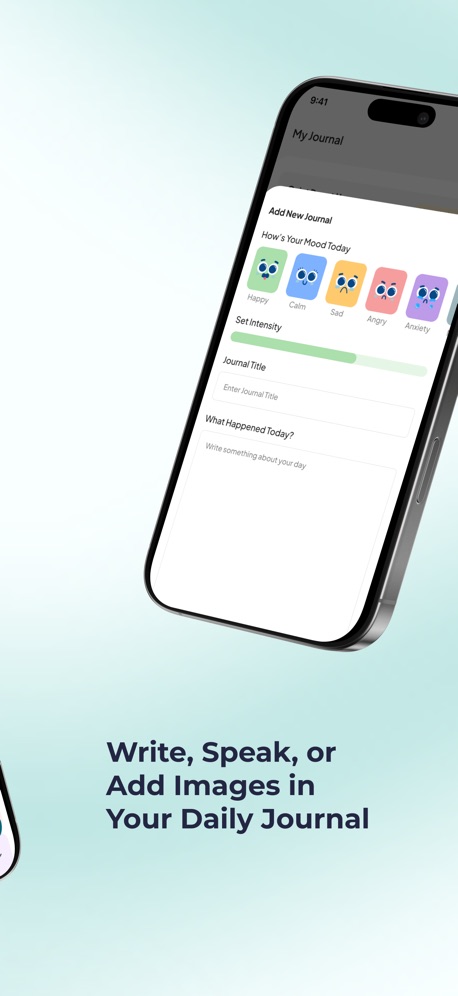
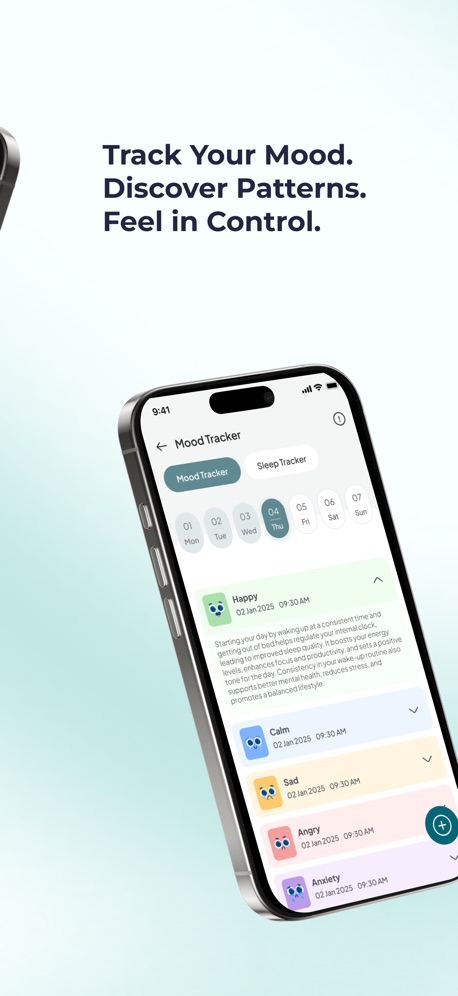
Instant Relief lets you tap your exact symptom, like racing thoughts or a wave of sadness, and gives you 3 CBT exercises with a 2-minute timer, no typing needed. When you do want to reflect, the journal accepts text, voice notes or images, with mood tags to spot triggers. A personalized 30-day plan of 2- to 5-minute activities builds CBT skills a little each day, and the mood and sleep tracker shows the bigger picture.
Compared with Clarity: Clarity goes deeper on written thought records; Soothfy is quicker in the moment and adds daily habits and mood and sleep tracking.
Key features
- Instant Relief: pick your exact symptom, like overwhelm or a racing mind, and get 3 CBT exercises with a 2-minute timer
- Personalized 30-day plan of 2- to 5-minute activities that adapts to your mood and energy
- Anchor Habits: new habits tied to routines you already do, like making coffee
- Mood and sleep tracker with weekly and monthly trends and reports for your doctor or therapist
- Journal with text, voice notes and images
Pros
- CBT relief in 2 minutes without writing
- Voice-note journaling
- Mood and sleep reports
Cons
- Less detailed thought-record templates than Clarity
Pricing
Free to download with a free trial, then $49.99/year or $8.99/month (U.S.). Get it on the App Store or Google Play, or learn more at soothfy.com.
Best for
- People who find writing thought records hard
- ADHD, anxiety or low mood

CBT without the blank page
Try Soothfy free: 2-minute CBT exercises and voice-note journaling.
Free to download · free trial · soothfy.com


2. MindShift CBT: Best Free CBT App for Anxiety
MindShift CBT was created with Anxiety Canada and offers thought journals, coping cards, belief experiments and guided relaxation for anxiety, worry, panic and perfectionism. It's free, with 4.3 stars from about 580 U.S. App Store reviews.
Compared with Clarity: Free and anxiety-focused, with more coping tools beyond thought records.
Key features
- Thought journal
- Coping cards
- Belief experiments
- Relaxation exercises
Pros
- Free
- Built with anxiety experts
Cons
- Smaller user base, simpler design
Pricing
Free.
Best for
- People with anxiety on a budget
3. Moodfit: Best CBT Plus Goals
Moodfit combines CBT thought records with mood tracking, breathing and daily goals for sleep, exercise and gratitude. It has 4.7 stars from about 2,200 U.S. reviews. See our Moodfit alternatives.
Compared with Clarity: Broader wellness toolkit, less focused on thought records alone.
Key features
- Thought records
- Mood tracking
- Breathing
- Daily goals
Pros
- Many tools in one app
Cons
- Busy design
Pricing
Free; Premium $39.99/year (U.S. App Store).
Best for
- People who want CBT plus habits
4. Wysa: Best AI-Guided CBT and DBT
Wysa guides you through CBT and DBT techniques in a chat, which some people find easier than filling in a form. It has 4.8 stars from about 24,500 U.S. reviews. See our Wysa alternatives.
Compared with Clarity: Conversational instead of form-based, with DBT skills too.
Key features
- AI chat
- CBT and DBT exercises
- Optional coaching
Pros
- Feels like talking it through
Cons
- Coaching costs extra
Pricing
Free; Tools $99.99/year (App Store description).
Best for
- People who prefer conversation to forms
5. MindDoc: Best for Symptom Tracking
MindDoc asks short questions about your mood and symptoms several times a day and turns them into insights and summaries, with CBT-based courses. It has 4.7 stars from about 29,500 U.S. reviews. See our MindDoc alternatives.
Compared with Clarity: More about measuring how you're doing; fewer thought-challenging tools.
Key features
- Regular check-ins
- Symptom summaries
- Courses
Pros
- Detailed insights
Cons
- Frequent check-ins
Pricing
Free; premium subscription available.
Best for
- People preparing for a doctor's appointment
6. Rewire: Best Newer CBT and DBT Journal
Rewire is a newer journal app built around CBT and DBT prompts, with a clean, modern design. It has 4.7 stars from about 410 U.S. reviews and is actively updated.
Compared with Clarity: Similar journaling approach with DBT skills added; much smaller and newer.
Key features
- CBT and DBT prompts
- Guided journaling
- Mood tracking
Pros
- Modern design
- DBT skills
Cons
- Small user base
Pricing
Free; premium subscription available.
Best for
- People who want CBT and DBT in one journal
7. Quabble: Best Friendly Daily Routines
Quabble turns mental health habits into short daily routines with a friendly duck mascot: mood check-ins, gratitude, breathing and reflection. It has 4.8 stars from about 4,600 U.S. reviews.
Compared with Clarity: Lighter and more playful, less structured CBT.
Key features
- Daily mood check-ins
- Short routines
- Gratitude and breathing
Pros
- Friendly and easy
Cons
- Less CBT depth
Pricing
Free; $8.99/month or yearly plan (App Store description).
Best for
- People who want light daily habits
Common Thinking Traps (and What to Ask)
| Thinking trap | Example | Helpful question |
|---|---|---|
| Catastrophizing | "If I fail this, my life is over." | What's the most likely outcome? |
| Black-and-white thinking | "I'm either perfect or a failure." | Is there a middle ground? |
| Mind reading | "They think I'm stupid." | What's the evidence for that? |
| Overgeneralizing | "I always mess up." | Is it really always? |
| Should statements | "I should be able to do this easily." | Who says? What would I tell a friend? |
| Emotional reasoning | "I feel useless, so I am useless." | Is a feeling the same as a fact? |
A 2-Minute Thought Record
- Situation: What happened? (one line)
- Thought: What went through your mind?
- Feeling: What did you feel, from 0 to 100?
- Evidence: One fact for the thought, one against.
- Balanced thought: A fairer way to see it.
- Re-rate: How strong is the feeling now?
You can do this in any notes app, by voice in Soothfy's journal, or in Clarity. If you're too upset to think clearly, calm your body first with a 2-minute breathing exercise.

CBT Apps and Therapy
CBT apps are a useful way to practise skills, but they work best as a complement to care, not a replacement. If anxiety or low mood are affecting your daily life, a therapist trained in CBT can guide you through techniques that are hard to do alone. See our Talkspace alternatives for online therapy options. Bringing your thought records or mood reports to sessions can make them more focused.
CBT, DBT and ACT: What's the Difference?
| Approach | Core idea | Example skill | Apps that use it |
|---|---|---|---|
| CBT | Thoughts affect feelings; change unhelpful thoughts | Thought records | Clarity, Soothfy, MindShift, Moodfit |
| DBT | Accept and regulate intense emotions | TIPP, distress tolerance | Wysa, Rewire |
| ACT | Accept thoughts and act on your values | Defusion, values exercises | Some meditation apps |
You don't need to pick one forever. Many people use CBT for anxious thoughts and DBT skills for overwhelming emotions.
Signs a CBT App Is Working
- You notice thinking traps faster in real life
- Strong feelings pass a little more quickly
- You can name what triggered a hard moment
- Your mood trends are slowly improving over weeks
- You reach for a skill instead of avoiding the feeling
If none of these change after a month of regular use, try a different approach or talk to a professional.
Key takeaways
- Clarity is a respected CBT journal; Pro Mode purchases range from $9.99 to $69.99.
- MindShift CBT is the best free alternative for anxiety; Wysa adds AI chat and DBT.
- Moodfit, MindDoc and Quabble add tracking and daily routines.
- Soothfy offers CBT relief in 2 minutes without writing, plus voice journaling and mood and sleep tracking.
Final Verdict
For free anxiety tools, choose MindShift CBT. For conversation-style CBT and DBT, Wysa. For tracking and goals, Moodfit or MindDoc. And for quick CBT help without the blank page, choose Soothfy.
More guides: Youper Alternatives, Woebot Alternatives, Best Apps for Overthinking, How We Feel Alternatives and How to Stop an ADHD Anxiety Spiral in 2 Minutes.
CBT that fits a hard day
Download Soothfy free: 2-minute exercises, voice journaling and mood tracking.
Free to download · free trial · soothfy.com
Clarity Alternatives: FAQs (2026)
1. What is the best Clarity CBT journal alternative in 2026?
Soothfy is our top pick if you want CBT tools that take less writing, plus mood and sleep tracking. MindShift CBT is the best free alternative, Moodfit adds goals and tracking, and Wysa offers AI chat with CBT and DBT tools.
2. How much does Clarity cost?
Clarity is free to download with a Pro Mode upgrade. App Pricing Lab lists several Pro Mode purchases from $9.99 to $69.99, so check the App Store for the current offer in your country.
3. What is a CBT thought record?
A thought record is a CBT exercise where you write down a situation, the automatic thought it triggered, how strongly you believe it, the evidence for and against, and a more balanced thought. It helps you catch and change unhelpful thinking patterns.
4. Is there a free CBT app?
MindShift CBT is free, and How We Feel, Moodfit, Wysa and MindDoc have free versions. Soothfy is free to download with a free trial.
5. What are thinking traps?
Thinking traps, or cognitive distortions, are common unhelpful thinking patterns, like catastrophizing, black-and-white thinking, mind reading and overgeneralizing. Clarity and similar apps help you spot them.
6. Which CBT app needs the least writing?
Soothfy's Instant Relief lets you tap your symptom and follow 2-minute exercises without writing. Its journal also accepts voice notes.
7. Is a CBT app as good as CBT therapy?
No. Apps can help you practise CBT skills, but working with a trained therapist is more effective for many problems, especially moderate to severe anxiety or depression.
8. Which alternative is best for anxiety?
MindShift CBT was built for anxiety by Anxiety Canada, and Soothfy's Instant Relief targets anxious symptoms in the moment.
9. Which alternative has DBT skills?
Wysa and Rewire include DBT-based tools alongside CBT.
10. How often should I do thought records?
When a strong negative feeling comes up, or once a day as practice. Short and regular beats long and rare. Soothfy's Anchor Habits help you build it into your day; download it on the App Store or Google Play.
Sources
- App Pricing Lab: Clarity in-app purchases
- Clarity on the U.S. App Store
- MindShift CBT on the U.S. App Store
- Moodfit on the U.S. App Store
- Quabble on the U.S. App Store
- 988 Suicide & Crisis Lifeline
This article is for information only and is not medical advice. Prices and features change often; check each provider's website or app store listing before you buy. Last updated November 21, 2026. Soothfy: soothfy.com